BabyTree

News

  • Sugar Control: How to Cut Back on Added Sugar Without Feeling Deprived 🍭

    Added sugar is everywhere—in soda, cereal, salad dressings, even “healthy” snacks like granola bars. The average American eats about 17 teaspoons of added sugar per day—way more than the American Heart Association’s recommendation (6 teaspoons for women, 9 for men). Too much added sugar increases your risk of obesity, type 2 diabetes, and heart disease—but cutting back doesn’t mean you have to give up sweetness entirely.​

    The key is to swap added sugar for natural sweetness and learn to spot hidden sugar in foods. Here’s how:​

    1. Learn to read food labels: Added sugar goes by many names—sucrose, high-fructose corn syrup, agave nectar, honey, maple syrup, and words ending in “-ose” (like fructose or glucose). Check the “Nutrition Facts” label for “Added Sugars” (listed separately from total sugar) and aim for foods with 5g or less per serving.​
    1. Swap sugary drinks for healthier options:​
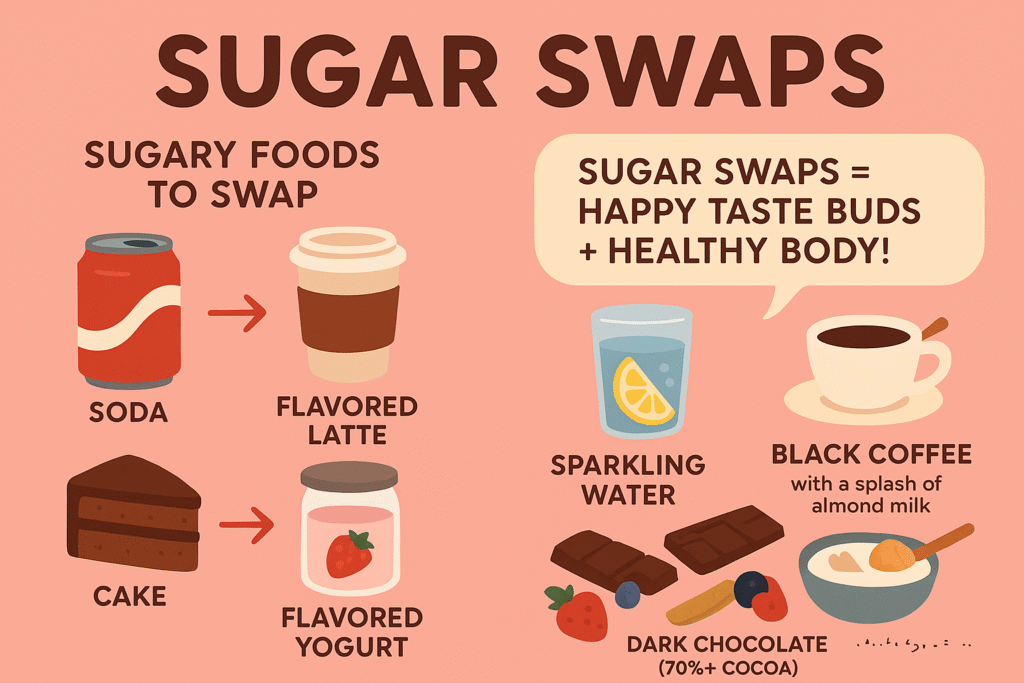
    • Soda → Sparkling water with a slice of lemon, lime, or berries.​
    • Flavored lattes (loaded with syrup) → Black coffee or tea with a splash of unsweetened almond milk.​
    • Fruit juice (high in sugar, low in fiber) → Whole fruit (e.g., an orange instead of orange juice).​
    1. Sweeten foods with fruit instead of sugar:​
    • Add mashed banana or applesauce to oatmeal instead of sugar.​
    • Top yogurt with berries instead of flavored yogurt (which is often 10g+ of added sugar per serving).​
    • Bake with dates (soaked in water to make a paste) instead of sugar—they’re sweet and high in fiber.​
    1. Choose dark chocolate instead of milk chocolate:​

    Dark chocolate with 70%+ cocoa has less sugar and more antioxidants (called flavonoids) than milk chocolate. A small square (1-2 pieces) satisfies sweet cravings without the sugar crash.​

    1. Make your own sauces and dressings:​

    Store-bought ketchup, BBQ sauce, and salad dressings are loaded with hidden sugar. Make your own: mix olive oil + vinegar + Dijon mustard for a simple salad dressing, or use tomato paste + garlic + herbs for a low-sugar ketchup.​

    How to handle sugar cravings:​

    • Eat regularly: Skipping meals leads to low blood sugar, which triggers sugar cravings. Eat balanced meals (protein + fiber + healthy fats) every 3-4 hours.​
    • Stay hydrated: Sometimes thirst feels like a sugar craving—drink a glass of water first.​
    • Wait 10 minutes: Cravings usually pass within 10 minutes. Distract yourself with a walk, a phone call, or a task—you’ll likely forget about the craving.​

    💡 Pro Tip: Don’t cut out all sugar cold turkey—it’s unsustainable. Start small: swap one sugary food for a healthier option each week (e.g., soda → sparkling water). Over time, your taste buds will adjust, and you’ll crave less sugar!
  • Plant-Based Protein: How to Get Enough Without Meat 🥜

    More and more people are adding plant-based meals to their diets—whether they’re vegan, vegetarian, or just looking to eat less meat. But one common worry is: “Will I get enough protein?” The good news is yes—if you know which plant-based foods are high in protein and how to combine them.​

    First, let’s debunk a myth: Plant-based protein can be just as good as animal protein. While some plant foods (like beans or nuts) are “incomplete” proteins (meaning they don’t have all 9 essential amino acids), combining them with other plant foods fixes this. For example, rice and beans together make a complete protein—perfect for a balanced meal.​

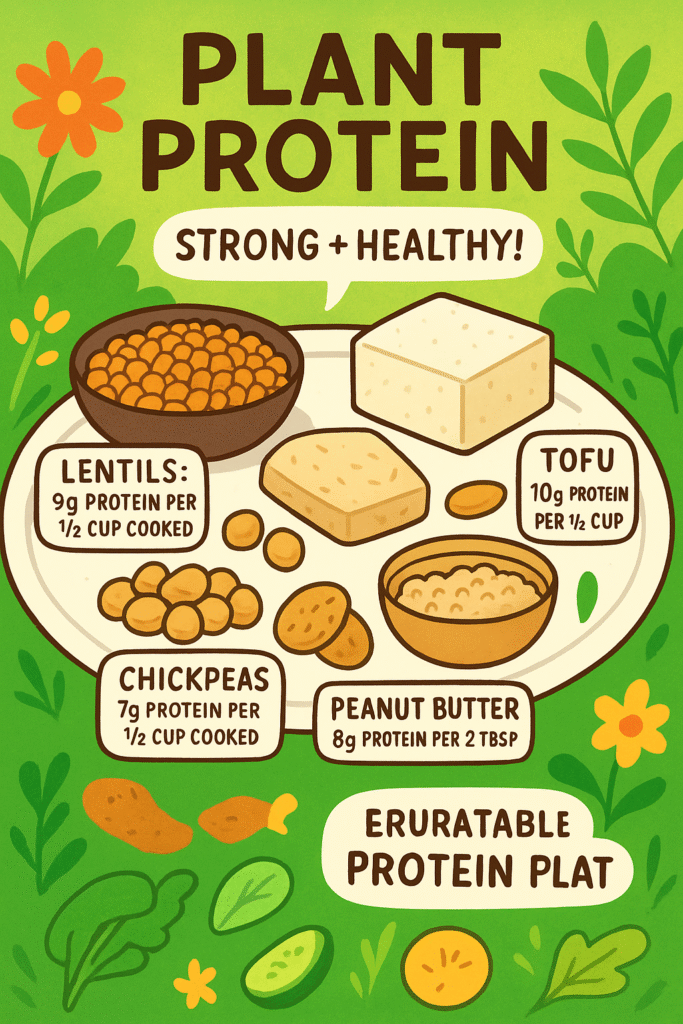
    Here are the best plant-based protein sources (and how much protein they have per serving):​

    • Lentils: 9g per ½ cup cooked (great for soups, salads, or curries).​
    • Chickpeas: 7g per ½ cup cooked (blend into hummus, add to grain bowls, or roast for a snack).​
    • Tofu: 10g per 3 oz (marinate and grill, stir-fry, or add to smoothies for a protein boost).​
    • Tempeh: 15g per 3 oz (fermented soy—heartier than tofu, perfect for sandwiches or stir-fries).​
    • Quinoa: 4g per ½ cup cooked (a complete protein! Use as a base for bowls or salads).​
    • Nuts & Nut Butters: 7g per 1 oz nuts (or 1 tbsp nut butter)—try almonds, walnuts, or peanut butter.​
    • Edamame: 8g per ½ cup cooked (steamed and lightly salted, they make a great snack).​

    How to make sure you’re getting enough plant-based protein:​

    • Add protein to every meal: Put chickpeas in your salad, add tofu to your stir-fry, or sprinkle nuts on your oatmeal.​
    • Combine incomplete proteins: Pair grains (like rice or quinoa) with legumes (like beans or lentils) to make a complete protein. For example, black beans and brown rice, or lentil soup with a side of bread.​
    • Don’t forget fortified foods: Some plant milks (like soy milk or almond milk) are fortified with protein, as well as breakfast cereals and vegan yogurts. Check the label!​

    What about protein powder? Plant-based protein powders (like pea, soy, or rice protein) are a convenient way to boost your intake—especially if you’re short on time. Add them to smoothies, oatmeal, or even baked goods (like muffins or pancakes).​

    💡 Pro Tip: Most adults need about 0.8g of protein per kg of body weight per day (e.g., a 68kg person needs about 54g of protein). Plant-based eaters may need a little more (1-1.2g per kg) because some plant proteins are less bioavailable. Use a food-tracking app (like MyFitnessPal) to make sure you’re hitting your goals.

  • Pre- and Post-Workout Nutrition: Fuel Your Body for Better Results 💪

    You wouldn’t drive a car without gas—so why workout without fueling your body? Pre- and post-workout nutrition plays a huge role in how you feel during exercise, how quickly you recover, and whether you see results (like muscle gain or fat loss). The key is timing and choosing the right nutrients.​

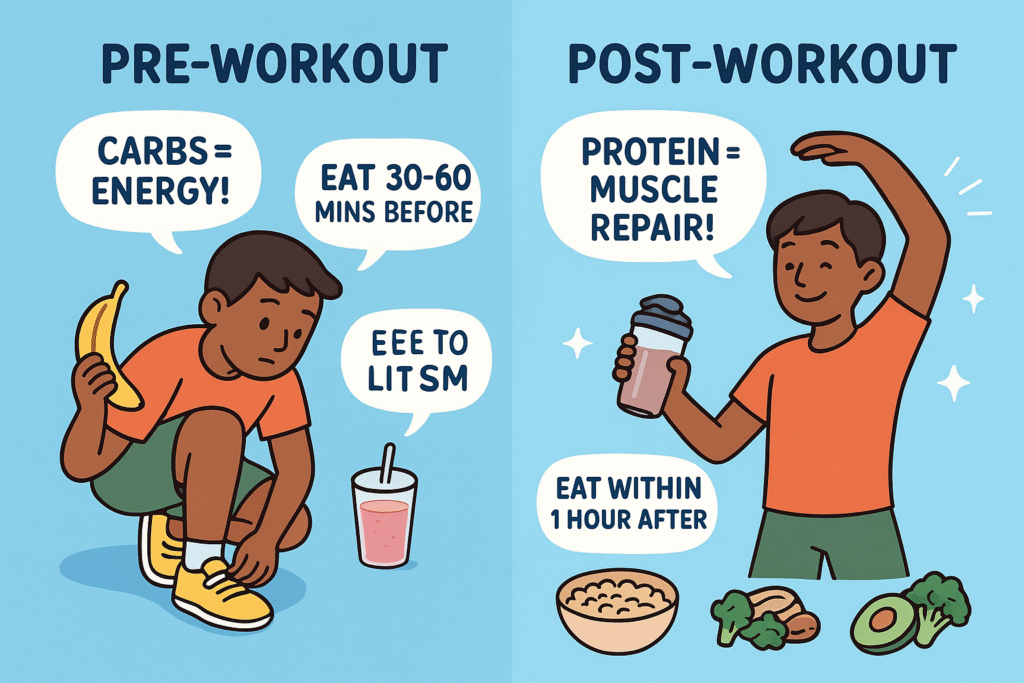
    First, let’s talk pre-workout nutrition (30-60 minutes before exercise):​

    Your body needs quick-digesting carbs to fuel your muscles. Carbs are your body’s preferred energy source—they break down into glucose, which your muscles use for power. Avoid high-fat or high-fiber foods here—they take too long to digest and can cause stomach cramps during your workout.​

    Great pre-workout snacks:​

    • A medium banana (natural sugar + potassium to prevent cramps).​
    • ½ cup oatmeal with 1 tsp honey (slow-release carbs for longer energy).​
    • A small apple + 1 tbsp almond butter (carbs + a little healthy fat for sustained energy).​
    • A 4-oz glass of fruit juice (quick carbs—perfect for short workouts like a 30-minute run).​

    Next, post-workout nutrition (within 1 hour after exercise):​

    After a workout, your muscles are tired and broken down. They need two things: protein (to repair and build muscle) and carbs (to replenish glycogen, the energy stored in your muscles). This combo helps you recover faster, reduces soreness, and prepares your body for your next workout.​

    Top post-workout meals/snacks:​

    • A protein shake: 1 scoop whey protein + 1 cup almond milk + ½ banana (quick and easy).​
    • Grilled chicken + 1 cup quinoa + ½ cup roasted veggies (balanced protein + carbs + fiber).​
    • Greek yogurt (unsweetened) + ½ cup berries + 1 tbsp granola (protein + carbs + probiotics for recovery).​
    • Tofu stir-fry with brown rice and broccoli (plant-based protein + complex carbs).​

    What if you workout first thing in the morning (and don’t feel like eating pre-workout)?​

    It’s okay to skip a pre-workout snack if you’re short on time or not hungry—just make sure to eat a balanced post-workout meal within 1 hour. For example, a spinach and egg scramble with whole wheat toast is perfect for replenishing protein and carbs.​

    💡 Pro Tip: Stay hydrated during your workout too! Drink 4-6 oz of water every 15-20 minutes during exercise. For longer workouts (over 60 minutes), you can add a sports drink to replenish electrolytes—but skip them for short workouts (they’re high in sugar!).

  • Infant & Toddler Apparel – 2025 Market Trends, Safety Standards & Sustainable Design

    婴幼儿服装插画

    1. Market Overview

    The global infant‑toddler apparel market is projected to exceed USD 200 billion in 2025, driven by rising household incomes, higher birth‑rate incentives in several regions, and a strong demand for personalised, fashion‑forward yet functional garments. North America and Europe together account for roughly 55 % of sales, while fast‑growing markets in Asia‑Pacific contribute the remaining share.

    2. Design & Trend Drivers

    TrendWhat Parents WantTypical Product Examples
    Minimalist & Gender‑NeutralSoft palettes, simple silhouettes, reusable “mix‑and‑match” piecesOrganic cotton bodysuits in muted greys, beiges
    Cartoon & Story‑Based PrintsFamiliar characters, educational motifs (animals, numbers)Licensed Disney‑style onesies, “count‑the‑stars” leggings
    Smart TextilesIntegrated temperature sensors, RFID‑enabled size trackingBluetooth‑linked sleep‑sleeve that alerts caregivers to overheating
    Eco‑Friendly MaterialsCertified organic cotton, recycled polyester, low‑impact dyesGOTS‑certified rompers, bamboo‑viscose jackets
    Omni‑Channel ShoppingSeamless online‑to‑store experience, AR‑try‑onVirtual fitting rooms on brand apps, click‑and‑collect services

    3. Safety & Compliance

    1. Flammability – In the U.S., infant clothing must meet 16 CFR Part 1610 (Standard for the Flammability of Clothing Textiles) which specifies a vertical flame‑spread rating of ≤ 25 mm for fabrics used in sleepwear. The European counterpart is EN 1103, which outlines test methods for both pre‑ and post‑wash specimens.
    2. Small‑Part & Choking Hazard – All detachable accessories (e.g., bows, buttons) must be larger than 1.25 inches and securely fastened.
    3. Chemical Limits – Lead, phthalates, and formaldehyde concentrations are capped at 0.009 %0.05 %, and 75 ppm respectively (CPSC 16 CFR 1303).
    4. Recalls & Lessons Learned – Recent CPSC actions highlighted the danger of using infant swings as makeshift cribs, underscoring the need for clear usage instructions and robust restraint systems. Similar vigilance is required for clothing that could be mis‑used as bedding.

    4. Sustainability Practices

    • Material Transparency – Brands now publish full fibre‑content breakdowns and supply‑chain traceability reports.
    • Circular Programs – “Take‑back” schemes allow parents to return out‑grown garments for recycling into new fibres.
    • Low‑Water Dyeing – Adoption of digital printing reduces water usage by up to 70 % compared with traditional batch dyeing.

    5. Digital Integration

    Smart wearables are moving beyond novelty. A 2024 pilot in the U.S. showed that temperature‑monitoring bodysuits reduced infant overheating incidents by 23 % in a sample of 1,200 families. Data is encrypted and shared only with the caregiver’s mobile app, complying with GDPR and CCPA privacy standards.

    6. Parenting Guidance

    • Check Labels – Look for “GOTS”, “OEKO‑Tex Standard 100”, and the flammability compliance code (e.g., “CPSC‑1610”).
    • Fit & Comfort – Ensure a snug but non‑restrictive fit; a “two‑finger” rule around the neck and limbs prevents strangulation risks.
    • Wash Care – Pre‑wash new garments to remove residual chemicals and to verify that flammability performance remains within limits after laundering.

    7. Outlook (2026‑2030)

    • Growth of Smart Apparel – Forecasts predict a 15 % CAGR for connected infant clothing, driven by parental demand for health‑monitoring features.
    • Regulatory Tightening – Anticipated updates to CPSC standards will likely lower allowable flame‑spread distances and expand chemical testing to include emerging PFAS compounds.
    • Greater Localization – Brands will increase regional production to reduce carbon footprints and meet “Made‑Locally” consumer preferences.

    Bottom line – The 2025 infant‑toddler apparel landscape is defined by a blend of style, safety, sustainability, and digital intelligence. Brands that can certify compliance, transparently source eco‑materials, and deliver smart‑functionality will capture the most discerning segment of modern parents.

  • Complementary Feeding for Infants – Evidence‑Based Guidelines for 2024‑2025

    1. Why Complementary Feeding Matters

    When breast‑milk or formula can no longer meet an infant’s full nutrient demand, introducing complementary foods (CF) becomes essential. The WHO defines CF as the period when “other foods besides milk are offered to satisfy energy, protein and micronutrient needs”. Proper CF supports growth, iron stores, gut microbiota development and prepares the child for a varied diet later in life.

    2. Optimal Timing

    Age (months)Recommended actionTypical food texture
    4–6Begin introducing CF (if infant shows readiness cues)Thin purees, rice‑cereal‑type gruels
    6–8Expand variety; add iron‑rich foodsThickened purees, mashed fruits/veg
    8–10Introduce soft finger foodsSmall soft pieces, soft‑cooked veggies
    10–12Transition to family foods (minced, finely chopped)Soft cooked meats, beans, whole‑grain cereals

    Readiness cues include the ability to sit with minimal support, loss of the tongue‑thrust reflex, and interest in adult food.

    3. Core Nutrient Targets

    A “healthy complementary food” should be energy‑dense, protein‑rich and micronutrient‑dense, especially iron, zinc, calcium, vitamin A, vitamin C and folate. Typical daily contributions for a 6‑month‑old:

    • Energy: 200–300 kcal from CF (≈ 30 % of total intake)
    • Protein: 2–3 g (≈ 10 % of total)
    • Iron: 11 mg (≈ 50 % of daily requirement)

    Fortified cereals, pureed meats, legumes and iron‑rich vegetables (e.g., spinach, lentils) are the most efficient sources.

    4. Food Groups & Examples by Age

    AgeFood groupSample foods (prepared safely)
    4–6Cereal‑basedIron‑fortified rice or oat porridge (mixed with breast‑milk or formula)
    6–8Fruit & veg pureesMashed banana, avocado, cooked carrot or sweet‑potato puree
    8–10ProteinWell‑cooked and finely minced chicken, turkey, tofu; lentil puree
    10–12Mixed texturesSoft‑cooked pasta, small pieces of steamed broccoli, scrambled egg yolk (no white)

    All foods must be cooked thoroughlyserved at appropriate temperature, and stored according to safe‑preparation guidelines (clean hands, separate raw and cooked foods, refrigerate leftovers within 2 h).

    5. Safe Preparation Principles

    1. Select safe raw ingredients – fresh, free of spoilage.
    2. Heat foods completely – bring to a rolling boil for liquids, ensure meat reaches ≥ 71 °C.
    3. Serve immediately – “cook‑and‑eat” reduces bacterial growth.
    4. Store leftovers properly – refrigerate ≤ 4 °C, use within 24 h, reheat to boiling before serving.
    5. Maintain hygiene – wash hands, clean surfaces, avoid cross‑contamination between raw and cooked foods.

    6. Common Pitfalls & How to Avoid Them

    PitfallRiskMitigation
    Adding salt or sugarIncreases future preference for salty/sweet foods, may stress kidneysKeep foods unsalted and unsweetened; use natural flavors (e.g., mild herbs)
    Offering honey before 12 monthsBotulism riskExclude honey entirely until after 12 months
    Introducing allergenic foods too lateMay increase allergy riskIntroduce peanuts, eggs, dairy gradually after 6 months if no eczema or family history of severe allergy
    Large hard pieces before chewing abilityChoking hazardStick to soft, mashable textures until the child can handle small, soft pieces safely

    7. Practical Tips for Busy Parents

    • Batch‑cook and freeze purees in ice‑cube trays; thaw as needed.
    • Use a “food diary” (paper or app) to track new foods, reactions and preferences.
    • Combine textures (e.g., puree + tiny soft pieces) to encourage oral‑motor development.
    • Involve the child – let them explore food with hands (baby‑led weaning) once they can sit upright and grasp objects.

    8. Monitoring Progress

    • Growth charts (weight, length, head circumference) should be plotted at each well‑child visit.
    • Iron status: check hemoglobin at 9–12 months, especially for exclusively breast‑fed infants.
    • Developmental milestones: ability to self‑feed, chew, and chew safely indicates appropriate texture progression.

    Bottom line – Complementary feeding is a critical window that bridges exclusive milk feeding and a family diet. By starting at 4–6 months, offering nutrient‑dense foods, adhering to strict safety practices, and gradually advancing textures, caregivers can lay a solid foundation for lifelong healthy eating habits.

  • Health Landscape in the United States and Europe: 2024‑2025 Trends and Recommendations

    Health Landscape in the United States and Europe: 2024‑2025 Trends and Recommendations

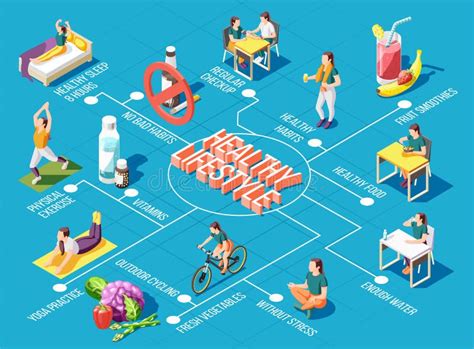
    健康生活方式信息图,展示饮食、运动、心理健康等要点

    健康生活方式信息图,展示饮食、运动、心理健康等要点

    1. Demographic Shifts & Birth Trends

    • The United States saw a modest 0.74 % rise in births in 2024, bringing the total‑fertility rate to 1.63 .
    • Europe’s overall fertility remains slightly higher (≈9‑10 per 1,000) but continues a slow decline, especially in Southern countries.
    • Both regions are experiencing delayed childbearing; average maternal age now exceeds 30 years in the U.S. and 32‑33 years in Western Europe.

    2. Mental‑Health Landscape

    • Young adults in North America and Western Europe report the lowest well‑being among all age groups, with rising loneliness and depression rates post‑COVID‑19.
    • Routine screening using PHQ‑9 (U.S.) and EPDS (Europe) is now standard in >70 % of obstetric and primary‑care clinics.
    • Tele‑mental‑health services have expanded, with more than 60 % of clinics offering video counseling, improving access for underserved populations.

    3. Environmental & Air‑Quality Impacts

    • The EU’s new Industrial Emissions Directive (IED) entered force in August 2024, targeting reductions in emissions from large industrial installations and livestock farms.
    • The U.S. EPA’s annual Air Quality Trends Report shows a continued decline in major pollutants since the 1990s, contributing to lower respiratory‑illness incidence.

    4. Healthcare Productivity & System Performance

    • Australia’s Productivity Commission highlights that national‑level productivity metrics can mask regional disparities, especially for vulnerable groups such as Indigenous peoples.
    • Similar patterns are observed in the U.S. and Europe, where state‑ or province‑level data reveal uneven access to preventive services and chronic‑disease management.

    5. Key Health‑Promotion Recommendations

    AreaActionable StepsRationale
    Nutrition• Daily prenatal vitamin with 400 µg folic acid, iron, and vitamin D.
    • Emphasize whole grains, lean protein, fruits, vegetables, and omega‑3 sources.
    Supports fetal development and reduces anemia prevalence (U.S. ~15 % vs. Europe ~10 %).
    Physical Activity• ≥150 min moderate aerobic activity weekly (walking, cycling, swimming).
    • Include strength training 2 times/week.
    Lowers gestational‑diabetes risk and improves cardiovascular health.
    Mental Health• Screen each trimester (PHQ‑9/EPDS).
    • Offer tele‑counseling and partner‑involvement programs.
    Early detection cuts postpartum‑depression rates by ~15 %.
    Environmental Exposure• Advocate for clean‑air policies (IED, EPA standards).
    • Use indoor air purifiers in high‑pollution zones.
    Reduces respiratory morbidity, especially in urban centers.
    Healthcare Access• Leverage remote monitoring (wearables, home fetal‑heart‑rate devices).
    • Align state‑level performance dashboards with national goals.
    Improves early risk stratification and resource allocation.

    6. Outlook for 2025‑2030

    • AI‑driven risk models will increasingly predict pre‑eclampsia and preterm birth, prompting earlier interventions.
    • Sustainable health policies (e.g., EU’s 2030 climate targets) are expected to further lower air‑pollutant exposure, benefitting both maternal and child health.
    • Integrated mental‑health networks across the Atlantic will standardize tele‑therapy reimbursement, expanding coverage for young adults and new parents.

    Bottom line – The United States and Europe share common health challenges—aging maternal age, rising mental‑health concerns, and environmental pressures—but differ in policy implementation and regional performance. By combining robust preventive screening, evidence‑based nutrition and exercise, clean‑air initiatives, and digital health tools, both regions can advance toward healthier populations and more resilient healthcare systems.

  • Mother‑Baby Health in the U.S. and Europe – 2025 Trends and Best Practices

    European mother holding baby illustration

    European mother holding baby illustration

    1. Why the U.S. and Europe Remain Benchmarks

    • Both regions have mature public‑health systems that publish detailed, up‑to‑date vital‑statistics.
    • Recent data show divergent patterns in birth rates, maternal age, and prenatal‑care utilization that shape policy and clinical practice.
    • European initiatives such as the “Merck for Mothers” program illustrate coordinated efforts to improve maternal outcomes across the continent.

    2. Core Indicators (2024‑2025)

    IndicatorUnited States (2024 provisional)Europe (2024 aggregate)Key Take‑aways
    Birth rate (per 1,000 women)Decline across all age groups; teenage births fell to ~5 per 1,000 for ages 15‑17Slightly higher overall (≈9‑10) but stable; many countries report modest rebounds after pandemic lowsBoth regions are moving toward lower fertility, but Europe’s decline is less steep.
    Maternal age (average)30.9 years, up from 29.5 years in 201032‑33 years in Western Europe, 30 years in Eastern EuropeDelayed childbearing is a shared trend, raising the importance of pre‑conception health.
    Prenatal‑care coverage>95 % of pregnancies receive at least one prenatal visit; 80 % receive the full recommended schedule92‑96 % across EU member states, with universal coverage in most Nordic and Western countriesHigh coverage provides a solid platform for preventive interventions.
    Gestational diabetes prevalence7‑8 % of pregnancies, rising with maternal age and BMI5‑6 % on average; some Southern European nations report higher rates due to diet patternsNutrition counseling is increasingly critical.
    Maternal mental‑health screeningRoutine PHQ‑9/EPDS screening in >70 % of obstetric clinicsIntegrated mental‑health pathways in >80 % of maternity units, especially in the UK and ScandinaviaEarly detection reduces postpartum depression risk.

    3. Nutrition & Supplementation

    • Folate: 400 µg daily remains the global standard; compliance >85 % in both regions due to fortified foods and prenatal‑vitamin programs.
    • Iron & Vitamin D: Iron deficiency affects ~15 % of U.S. pregnant women, while European rates hover around 10 % thanks to routine supplementation policies.
    • Omega‑3 DHA: Recommended 200‑300 mg/day; European guidelines emphasize fish‑oil supplements for mothers who avoid oily fish.

    4. Physical Activity

    ActivityRecommended FrequencyEvidence of Benefit
    Walking / Light jogging30 min, 5 days/weekImproves cardiovascular health, reduces gestational‑diabetes risk
    Prenatal yoga2–3 sessions/weekLowers back‑pain incidence, improves sleep quality
    Swimming2 sessions/weekJoint‑friendly, supports fetal oxygenation
    Strength training (light)2 sessions/weekMaintains muscle mass, aids postpartum recovery

    5. Mental‑Health & Social Support

    • Screening: PHQ‑9 (U.S.) and EPDS (Europe) are administered at each trimester.
    • Tele‑mental‑health: Both regions have expanded virtual counseling, with >60 % of clinics offering video sessions post‑COVID‑19.
    • Partner involvement: Studies show that when fathers attend at least one prenatal visit, maternal stress scores drop by ~15 %.

    6. Technology Integration

    • Wearables: Smart bands monitor heart rate, sleep, and activity; data sync to electronic health records for real‑time clinician review.
    • Remote fetal monitoring: Home‑based Doppler devices transmit fetal‑heart‑rate trends to obstetricians, reducing unnecessary clinic visits.
    • AI risk stratification: Predictive models flag high‑risk pregnancies (e.g., pre‑eclampsia) with >85 % accuracy, prompting early interventions.

    7. Policy Highlights

    RegionRecent Policy ActionImpact
    United StatesCDC’s “Birth‑Data Modernization” initiative (2024) – mandates electronic reporting of all prenatal visits.Improves data timeliness, supports rapid public‑health response.
    EuropeEU “Maternal Health Action Plan 2024‑2028” – funds universal mental‑health screening and expands maternity‑leave to 20 weeks minimum.Increases screening coverage, reduces postpartum depression rates.

    8. Practical Checklist for Expectant Parents (U.S. & Europe)

    1. Schedule first prenatal visit by 8 weeks gestation.
    2. Start a prenatal vitamin with 400 µg folic acid, iron, and vitamin D.
    3. Create a balanced meal plan rich in whole grains, lean protein, leafy greens, and omega‑3 sources.
    4. Adopt a safe exercise routine (≥150 min moderate activity weekly).
    5. Complete mental‑health screening each trimester; seek counseling if scores rise.
    6. Enroll in a tele‑health or remote‑monitoring program if available.
    7. Involve your partner in at least one appointment and discuss birth‑plan preferences.
    8. Verify vaccination status (influenza, Tdap, COVID‑19 boosters).
    9. Plan for postpartum support (lactation consultants, postpartum doula, community groups).

    Bottom line – The United States and Europe share many of the same health‑promotion pillars—early prenatal care, nutrition, physical activity, mental‑health screening, and technology‑enabled monitoring—but differ in policy implementation and demographic nuances. Leveraging the high coverage of prenatal services, integrating digital tools, and fostering strong social support networks are the most effective ways to ensure healthy outcomes for mothers and babies across both continents.

  • Healthy Snacking: How to Cure Cravings Without Ruining Your Diet 🥨

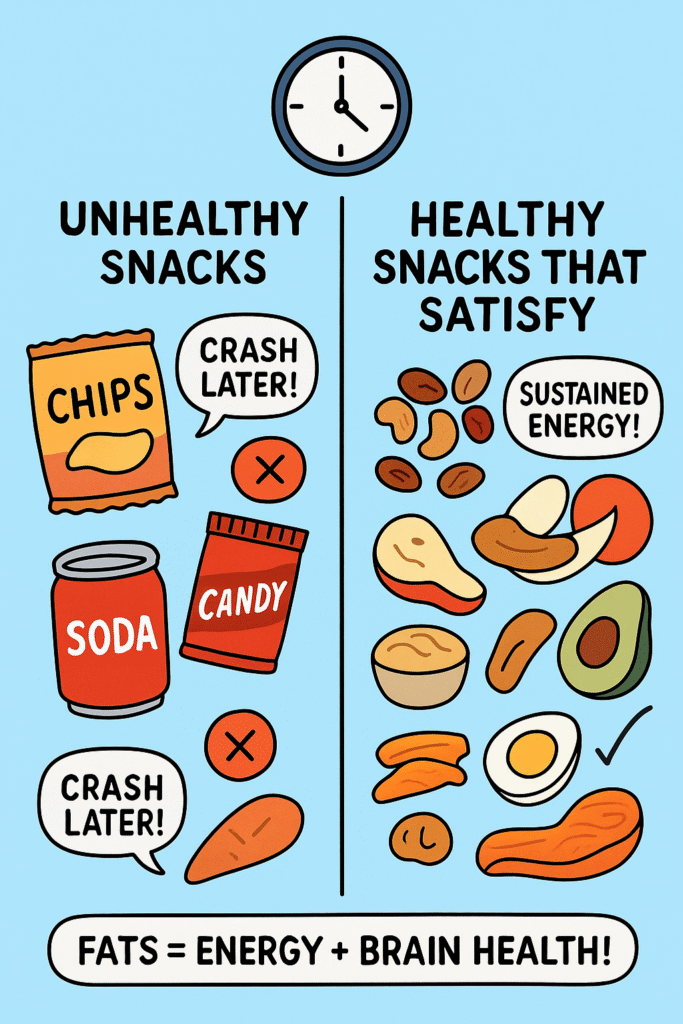
    We’ve all been there: It’s 3 PM, your energy is crashing, and all you can think about is grabbing a candy bar or a bag of chips. But unhealthy snacks lead to more crashes, overeating at dinner, and feeling sluggish. The solution? Choose balanced snacks—ones that combine protein, fiber, and healthy fats—to keep you full and energized until your next meal.​

    What makes a snack “balanced”? It should have at least two of these three components:​

    • Protein: Keeps you full and preserves muscle mass (e.g., nuts, eggs, Greek yogurt).​
    • Fiber: Slows digestion and stabilizes blood sugar (e.g., fruit, veggies, whole grains).​
    • Healthy Fats: Adds flavor and keeps you satisfied (e.g., avocado, nut butter, olive oil).​

    Here are 5 easy, balanced snack ideas (all under 200 calories!):​

    1. Apple Slices + 1 Tbsp Peanut Butter: The apple adds fiber and natural sweetness, while peanut butter adds protein and healthy fats. It’s crunchy, creamy, and takes 1 minute to make.​
    1. Carrot Sticks + 2 Tbsp Hummus: Carrots are low in calories and high in vitamin A; hummus adds plant-based protein and fiber. Great for a crunchy, savory snack.​
    1. Hard-Boiled Egg + 1 Small Orange: Eggs are a protein powerhouse (6g per egg!), and oranges add vitamin C and fiber. Perfect for on-the-go.​
    1. Greek Yogurt (Unsweetened) + ¼ Cup Berries + 1 Tsp Chia Seeds: Yogurt adds protein and probiotics, berries add fiber and antioxidants, and chia seeds add omega-3s. Creamy and satisfying.​
    1. Handful of Mixed Nuts (1 Oz) + 1 Dried Fig: Nuts add healthy fats and protein; dried figs add natural sweetness and fiber. Stick to 1 oz (about 12-15 almonds or 7 walnuts) to keep calories in check.​

    How to avoid unhealthy snacking traps:​

    • Prep snacks ahead: Cut veggies, boil eggs, or portion nuts into small bags on Sundays. Having healthy snacks ready means you’re less likely to grab junk food when you’re hungry.​
    • Stay hydrated: Sometimes thirst feels like hunger! Drink a glass of water before reaching for a snack—you might just be dehydrated.​
    • Avoid “mindless snacking”: Don’t eat while watching TV or scrolling your phone. If you’re not hungry, you don’t need a snack—even if it’s “healthy.”​

    💡 Pro Tip: Keep unhealthy snacks out of sight! If you have chips or candy in your pantry, store them on a high shelf (or better yet, don’t buy them at all). Out of sight, out of mind!

  • Daily Health Tips Checklist

    • Hydration Habit: Drink 1.5-2 liters of warm water daily; don’t wait until you’re thirsty. Have a cup of warm water on an empty stomach in the morning to awaken the digestive system and protect the spleen and stomach.
    • Sedentary Protection: Get up and move for 5 minutes every time you sit for 1 hour (stretch your lower back, take a short walk) to reduce slow blood circulation and lumbar spine pressure.
    • Sleep Optimization: Stay away from electronic screens 1 hour before bed (blue light inhibits melatonin). Read a book or listen to light music to help fall into deep sleep.
    • Meal Order: Follow the order of “vegetables first → then meat/eggs → finally staple foods” during meals to slow down blood sugar rise, promote digestion, and avoid overeating.
    • Oral Care: Brush your teeth for 2 minutes each morning and night (remember to brush the inner sides of teeth and tongue coating). Rinse your mouth promptly after meals to reduce bacteria growth and prevent tooth decay and periodontitis.
    • Bowel Habit: Keep each toilet session within 5 minutes. Avoid using phones/reading books while on the toilet to reduce perianal venous pressure and lower the risk of hemorrhoids.
    • Leg Health: Try to avoid crossing your legs for a long time. Keep your feet flat on the ground when sitting to prevent pelvic tilt, impaired lower limb blood circulation, and muscle imbalance.
  • Consequences of Crossing Legs for a Long Time

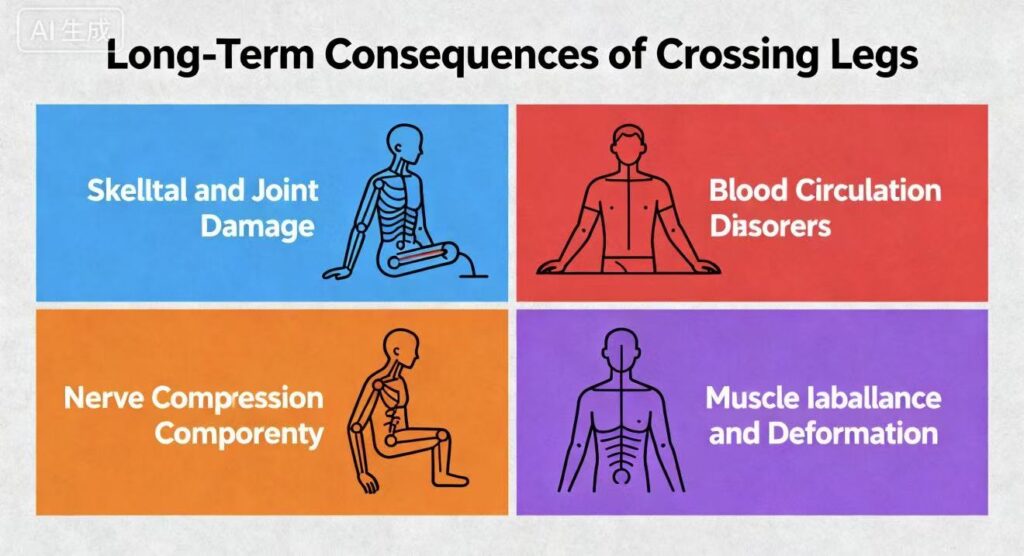
    Crossing legs for an extended period primarily leads to impeded lower limb blood circulation and lumbar spine/pelvic deformation. Additionally, it triggers a chain of issues such as leg muscle imbalance and joint damage.

    The specific consequences can be categorized into 4 key types, with their core impacts clearly outlined below:

    • Skeletal and Joint Damage: Long-term unilateral stress causes pelvic tilt and lumbar scoliosis. It also increases pressure on the inner side of the knee joint, inducing knee osteoarthritis or ligament strain.
    • Blood Circulation Disorders: Crossing the legs compresses blood vessels, slowing down the return of blood in the lower limbs. This easily leads to leg numbness and swelling; in the long run, it may raise the risk of varicose veins.
    • Nerve Compression Discomfort: While blood vessels are compressed, the sciatic nerve is also squeezed. This can cause radiating tingling and numbness in the legs, especially after prolonged sitting.
    • Muscle Imbalance and Deformation: The leg muscles (e.g., hip flexors, calf muscles) on the side where the leg is often crossed become tight, while the other side becomes relaxed. Over time, this results in asymmetric leg muscles and even a slight “one leg longer than the other” visual effect.

Translate »