BabyTree

Author: 张麻子

  • Essential Baby Gear for New Parents: What You Really Need (and What You Don’t)

    Preparing for a new baby can be overwhelming, especially when it comes to buying baby gear. With so many products on the market, it’s easy to feel pressured to buy everything—but the truth is, you don’t need all the fancy gadgets. Focusing on the essentials will save you time, money, and space, while ensuring your baby is safe and comfortable.

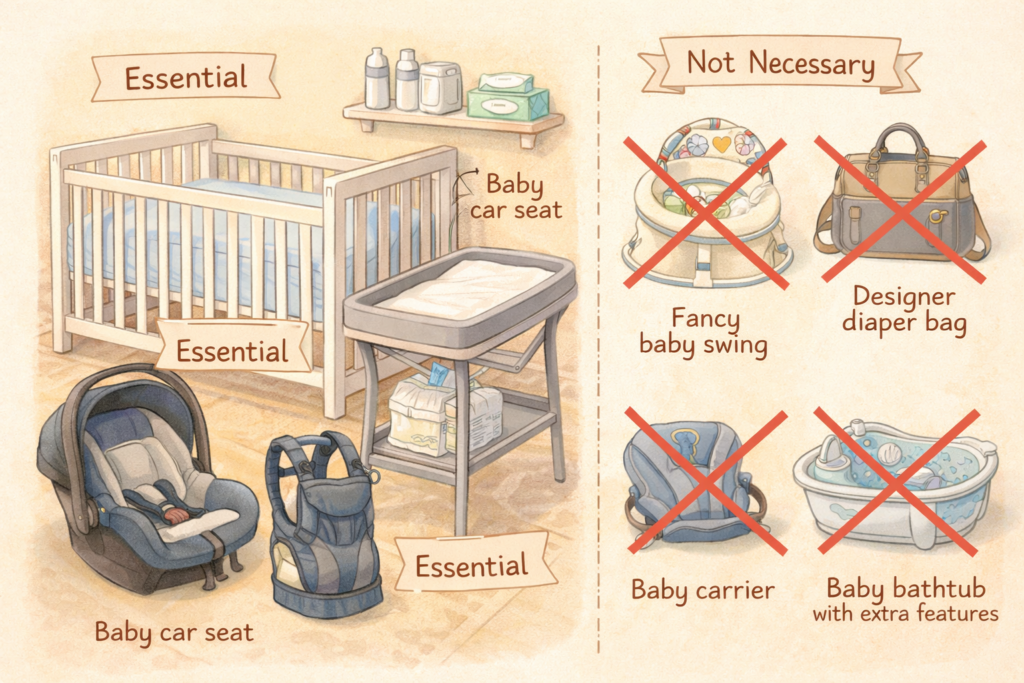
    Here are the essential baby gear items every new parent needs:

    1. Crib, Mattress, and Fitted Sheets: A safe place for your baby to sleep is non-negotiable. Choose a sturdy crib that meets current safety standards (no drop-side rails), a firm, flat mattress (loose mattresses are a suffocation hazard), and 2-3 fitted sheets (for easy changing).

    2. Baby Car Seat: This is a must-have for transporting your baby safely in a car. Choose an infant car seat that is rear-facing (required for babies under 2 years old) and fits your car properly. Look for a car seat that is easy to install and adjust.

    3. Diapers and Wipes: You’ll go through a lot of diapers (up to 10-12 per day for newborns!), so stock up on disposable or cloth diapers (whichever you prefer) and gentle baby wipes. A changing pad (for use on a changing table or any flat surface) is also essential for easy, clean diaper changes.

    4. Baby Carrier or Sling: A baby carrier allows you to keep your baby close while having your hands free to do other tasks. Choose a carrier that is comfortable for both you and your baby, and supports your baby’s head and neck (critical for newborns).

    5. Feeding Supplies: If you’re breastfeeding, you’ll need a breast pump (for when you’re away from your baby), nursing pads (to prevent leaks), and a nursing bra. If you’re formula feeding, you’ll need baby bottles, a bottle warmer, formula, and a bottle brush for cleaning.

    6. Baby Clothes: Stock up on 6-8 onesies (short-sleeve and long-sleeve), 2-3 sleepers, 2-3 pairs of socks, and a few hats (newborns lose heat through their heads). Choose clothes that are easy to put on and take off (with snaps or zippers) and made of soft, breathable fabric (like cotton).

    Now, what don’t you need? Fancy baby swings, designer diaper bags, and expensive baby bathtubs (a simple plastic tub that fits in your sink works just fine) are all nice-to-haves but not essential. Focus on the items that keep your baby safe, comfortable, and well-cared for—everything else is a bonus.

    Remember, every family is different, and what works for one parent may not work for another. Don’t feel pressured to buy everything on every “must-have” list. Stick to the essentials, and add other items as you need them. The most important thing is that you and your baby are happy and healthy.

  • How to Establish a Healthy Sleep Routine for Your Newborn

    Establishing a consistent sleep routine is one of the most important things you can do for your newborn—and for yourself. Newborns sleep up to 18 hours a day, but their sleep is fragmented, often lasting just 2-3 hours at a time. A predictable routine helps your baby learn the difference between day and night, encouraging longer, more restful sleep as they grow.

    Start by creating a calm pre-sleep ritual that you repeat every night, 30-45 minutes before bedtime. This ritual signals to your baby that it’s time to wind down. Ideas for a pre-sleep routine include a warm bath (using gentle, tear-free baby soap), a soft massage with baby oil, dressing your baby in comfortable pajamas, and reading a short, soothing story or singing a lullaby. Avoid bright lights, loud noises, and screen time during this period—these can overstimulate your baby and make it harder for them to fall asleep.

    During the day, keep your baby’s environment bright and active. Open curtains to let in natural light, talk to your baby frequently, and engage in gentle play. This helps your baby distinguish between day (time to be awake and alert) and night (time to sleep). When your baby wakes up during the day for feedings, keep interactions brief and focused—avoid prolonged play or stimulation that might confuse their internal clock.

    It’s important to be patient—newborns take time to adjust to routines, and there will be nights when things don’t go as planned. Stick to the same sequence of activities every night, even on weekends, to reinforce the routine. As your baby grows (around 3-4 months), their sleep cycles will lengthen, and they will start to sleep for longer stretches at night. Remember, every baby is different—some may adapt to a routine faster than others, and that’s perfectly normal. The goal is to create a calm, predictable environment that helps your baby feel safe and secure, setting the foundation for healthy sleep habits that will last a lifetime.

  • Hydration and Electrolytes for Exercise: How to Replenish What You Sweat Out

    When you exercise, you lose more than just water—you also sweat out electrolytes, minerals that help regulate fluid balance, muscle function, and nerve signals. Dehydration (from not drinking enough water) or electrolyte imbalance (from losing too many minerals) can cause fatigue, muscle cramps, dizziness, and even heat exhaustion—ruining your workout and putting your health at risk. Knowing how to hydrate properly, and when to replenish electrolytes, is key for any fitness routine.

    First, let’s clarify the difference between water and electrolytes:

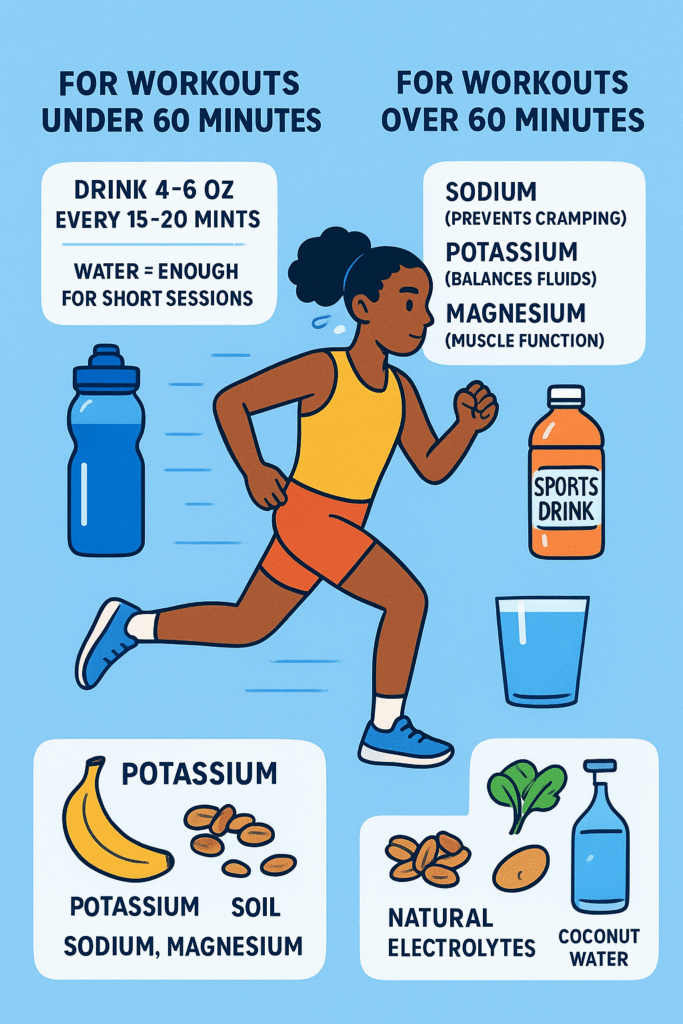
    • Water: Essential for all bodily functions, including regulating body temperature and transporting nutrients. For short workouts (under 60 minutes), water is usually enough to keep you hydrated—since you won’t lose a large amount of electrolytes.
    • Electrolytes: The most important electrolytes lost in sweat are sodium, potassium, and magnesium.
      • Sodium: Helps retain water, prevent muscle cramps, and maintain blood pressure.
      • Potassium: Balances fluids in cells and supports muscle contraction.
      • Magnesium: Aids in muscle recovery and prevents muscle spasms.

    When do you need more than just water? You should replenish electrolytes if:

    • Your workout lasts 60 minutes or longer (especially if it’s intense, like running or cycling).
    • You’re exercising in hot, humid weather (you’ll sweat more, losing more electrolytes).
    • You’re a heavy sweater (you notice large sweat stains or feel dripping wet during workouts).

    How to hydrate properly for exercise:

    1. Before Your Workout (1–2 hours before):
      • Drink 16–20 ounces of water to start hydrated.
      • If your workout will be long (over 90 minutes), you can have a small snack with electrolytes—like a banana (potassium) or a handful of salted almonds (sodium, magnesium).
    2. During Your Workout:
      • For workouts under 60 minutes: Drink 4–6 ounces of water every 15–20 minutes.
      • For workouts over 60 minutes: Drink a sports drink (or a homemade electrolyte drink) to replace both water and electrolytes. Aim for 4–6 ounces every 15–20 minutes. Look for sports drinks with 14–17 grams of carbohydrates and 45–60 milligrams of sodium per 8 ounces—this ratio helps your body absorb fluids quickly.
    3. After Your Workout:
      • Drink 16–24 ounces of water for every pound of weight you lost during exercise (weigh yourself before and after to estimate).
      • Replenish electrolytes with food: Eat a meal or snack that includes electrolytes and protein (for muscle recovery). Good options include:
        • Grilled chicken + brown rice + roasted sweet potatoes (sodium from chicken seasoning, potassium from sweet potatoes).
        • Greek yogurt + banana + a sprinkle of chia seeds (potassium from banana, magnesium from chia seeds).
        • Coconut water + a hard-boiled egg (natural electrolytes from coconut water, protein from egg).

    Homemade electrolyte drink recipe (a cheaper, lower-sugar alternative to store-bought sports drinks):

    • Ingredients: 1 cup water, 1 cup coconut water (natural electrolytes), 1 teaspoon honey (for quick carbs), ¼ teaspoon salt (sodium).
    • Instructions: Mix all ingredients together in a bottle. Chill before drinking.
    • Why it’s better: It has less sugar than most store-bought sports drinks (just 6 grams per cup vs. 10–12 grams) and uses natural ingredients.

    Common hydration mistakes to avoid:

    • Drinking too much water at once: Gulping 20 ounces of water before a workout can cause stomach cramps. Sip slowly instead.
    • Waiting until you’re thirsty to drink: Thirst is a sign you’re already dehydrated (about 1–2% of your body weight in fluid loss). Sip water throughout the day, not just during workouts.
    • Relying on sports drinks for short workouts: For 30–45 minute walks or gym sessions, sports drinks add unnecessary sugar. Stick to water instead.
    • Ignoring post-workout hydration: Even if you don’t feel thirsty after a workout, you still need to replace fluids lost through sweat. Set a reminder to drink water within 30 minutes of finishing exercise.

    By following these tips, you’ll keep your body hydrated, maintain electrolyte balance, and get the most out of every workout—without the risk of cramps or fatigue.

  • Homemade Healthy Sauces: Ditch Store-Bought for Fresh, Low-Sugar Options

    Store-bought sauces—from marinades to salad dressings to ketchup—are often hidden sources of added sugar, sodium, and artificial preservatives. A single tablespoon of store-bought barbecue sauce can have 5 grams of sugar, and a serving of creamy salad dressing may contain 300 milligrams of sodium (13% of your daily limit). The good news? Making your own sauces at home is quick, affordable, and lets you control exactly what goes in—no hidden junk required.​

    Homemade sauces offer three key benefits:​

    • Lower Sugar and Sodium: You can use natural sweeteners (like a pinch of honey or a splash of fruit juice) in small amounts, or skip sugar entirely. For sodium, you can season with herbs and spices instead of salt—reducing your intake without sacrificing flavor.​
    • Fresh, Bold Flavor: Store-bought sauces are often cooked in large batches and sit on shelves for months, losing freshness. Homemade sauces use fresh ingredients (like ripe tomatoes or herbs from your garden) that taste brighter and more vibrant.​
    • No Artificial Additives: You won’t find ingredients like “high-fructose corn syrup,” “artificial flavor,” or “preservatives” in your homemade sauces. This makes them easier to digest and better for long-term health.​

    Here are three easy, healthy homemade sauce recipes you can make in 15 minutes or less:​

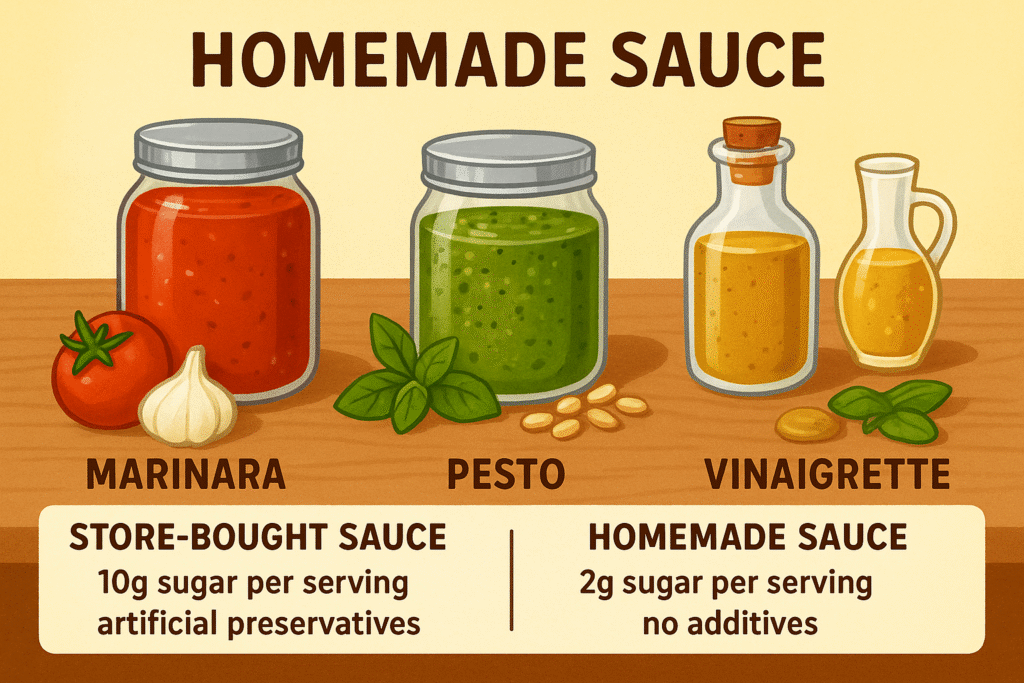
    1. Fresh Tomato Marinara (great for pasta, chicken, or veggies):​
    • Ingredients: 2 cups ripe tomatoes (chopped), 1 clove garlic (minced), 1 tablespoon olive oil, 1 teaspoon dried oregano, 1 teaspoon fresh basil (chopped), ¼ teaspoon salt, 1 pinch of black pepper.​
    • Instructions: Heat olive oil in a pan over medium heat. Add garlic and sauté for 1 minute (don’t burn it!). Add chopped tomatoes, oregano, salt, and pepper. Simmer for 10 minutes, stirring occasionally, until tomatoes break down. Stir in fresh basil before serving.​
    • Why it’s better: Store-bought marinara often has added sugar to balance acidity; this version uses ripe tomatoes’ natural sweetness. It has just 2 grams of sugar per serving (vs. 5–7 grams in store-bought).​
    1. Creamy Spinach Pesto (great for pasta, sandwiches, or as a dip):​
    • Ingredients: 2 cups fresh spinach, ¼ cup pine nuts (or walnuts), 1 clove garlic, ¼ cup grated Parmesan cheese, ¼ cup olive oil, ¼ teaspoon salt.​
    • Instructions: Add spinach, pine nuts, garlic, and Parmesan to a food processor. Pulse until coarsely chopped. With the processor running, slowly pour in olive oil until smooth. Add salt to taste.​
    • Why it’s better: Store-bought pesto may contain added oils or preservatives; this version is made with whole, fresh ingredients. It’s high in healthy fats from olive oil and pine nuts, and has no added sugar.​
    1. Simple Balsamic Vinaigrette (great for salads or as a marinade):​
    • Ingredients: 3 tablespoons olive oil, 1 tablespoon balsamic vinegar, 1 teaspoon Dijon mustard, 1 teaspoon honey (optional), ¼ teaspoon salt, 1 pinch of black pepper.​
    • Instructions: Whisk all ingredients together in a small bowl until combined. Store in a glass jar in the fridge for up to 2 weeks.​
    • Why it’s better: Creamy store-bought dressings are high in sodium and unhealthy fats; this vinaigrette uses heart-healthy olive oil. The optional honey adds just 1 gram of sugar per serving (vs. 5–8 grams in sweetened store-bought dressings).​

    Tips for storing homemade sauces:​

    • Use clean, airtight glass jars (like mason jars) to keep sauces fresh.​
    • Most sauces will last 1–2 weeks in the fridge. For longer storage, freeze in small portions (use ice cube trays for single-serve amounts).​
    • Label jars with the date you made the sauce—this helps you keep track of freshness.
  • Dietary Fiber and Blood Sugar Control: How Fiber Keeps Your Glucose Stable

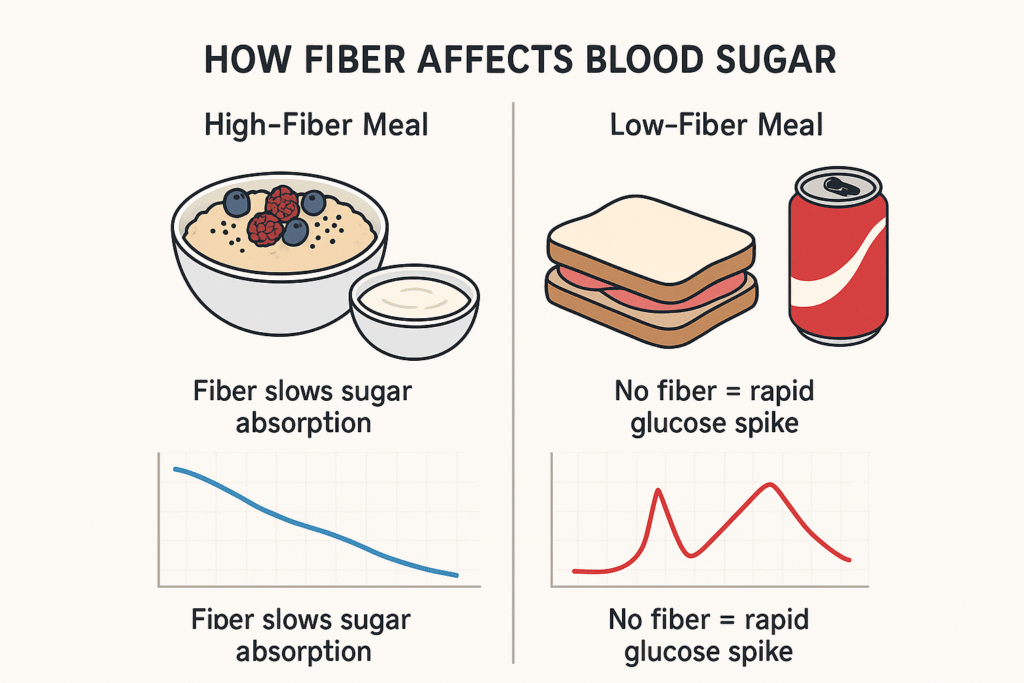
    For anyone managing blood sugar—whether you have prediabetes, type 2 diabetes, or just want to avoid energy crashes—dietary fiber is a powerful tool. Unlike refined carbs (which break down quickly into glucose), fiber slows the digestion and absorption of sugar, preventing sudden blood sugar spikes and keeping your energy levels consistent throughout the day.​

    To understand how fiber works, let’s break down its role in blood sugar regulation:​

    • Slows Digestion: Soluble fiber (found in oats, chia seeds, and apples) dissolves in water to form a gel-like substance in your gut. This gel coats the lining of your intestines, slowing the rate at which glucose from food enters your bloodstream. Instead of a sharp spike 30 minutes after eating, your blood sugar rises gradually—giving your body time to produce insulin and keep levels in check.​
    • Increases Insulin Sensitivity: Over time, regular fiber intake may improve how your body responds to insulin (the hormone that moves glucose from your blood into your cells). Studies show people who eat high-fiber diets have lower insulin resistance, a key factor in preventing type 2 diabetes.​
    • Promotes Satiety: High-fiber foods take longer to chew and digest, keeping you full for hours. This reduces the urge to snack on sugary or refined carb foods—like candy or white crackers—that would otherwise cause blood sugar to spike.​

    Not all fiber is created equal when it comes to blood sugar control. Focus on these high-impact sources:​

    • Soluble Fiber Stars: Oats (4 grams per ½ cup cooked), chia seeds (10 grams per 1 ounce), lentils (8 grams per ½ cup cooked), apples with skin (4 grams per medium apple), and Brussels sprouts (3 grams per ½ cup cooked).​
    • Insoluble Fiber Boosters: While soluble fiber is more directly linked to blood sugar control, insoluble fiber (found in whole wheat, leafy greens, and nuts) supports overall gut health—which in turn helps regulate metabolism and glucose processing. Aim for a mix of both types.​

    Practical ways to add more fiber to your diet for better blood sugar:​

    1. Start your day with a high-fiber breakfast: Mix ½ cup oats with 1 tablespoon chia seeds and ½ cup berries. Top with a dollop of Greek yogurt for protein (protein also slows sugar absorption).​
    1. Swap refined carbs for whole grains: Choose whole wheat bread instead of white, brown rice instead of white rice, and quinoa instead of pasta. Look for labels that say “100% whole grain”—these have more fiber than “multigrain” options.​
    1. Add fiber to meals: Toss ½ cup lentils into soups, salads, or stir-fries. Sprinkle 1 tablespoon ground flaxseed over yogurt or oatmeal. Snack on a small handful of almonds (3.5 grams of fiber per 1 ounce) instead of chips.​

    Important note: If you’re new to eating more fiber, increase your intake gradually (add 2–3 grams per day) and drink more water. Sudden high fiber intake can cause bloating or gas as your gut adjusts.

  • Reducing Processed Foods: Simple Swaps for a More Whole-Food Diet

    Processed foods—those that are packaged, refined, or contain added sugars, salt, and artificial ingredients—are a staple in many modern diets. But while they’re convenient, they often lack nutrients and can contribute to weight gain, high blood pressure, and other health issues when eaten in excess. Reducing processed foods and choosing whole foods (unrefined, minimally processed foods like fruits, veggies, whole grains, and lean protein) is a simple way to improve your overall health.​

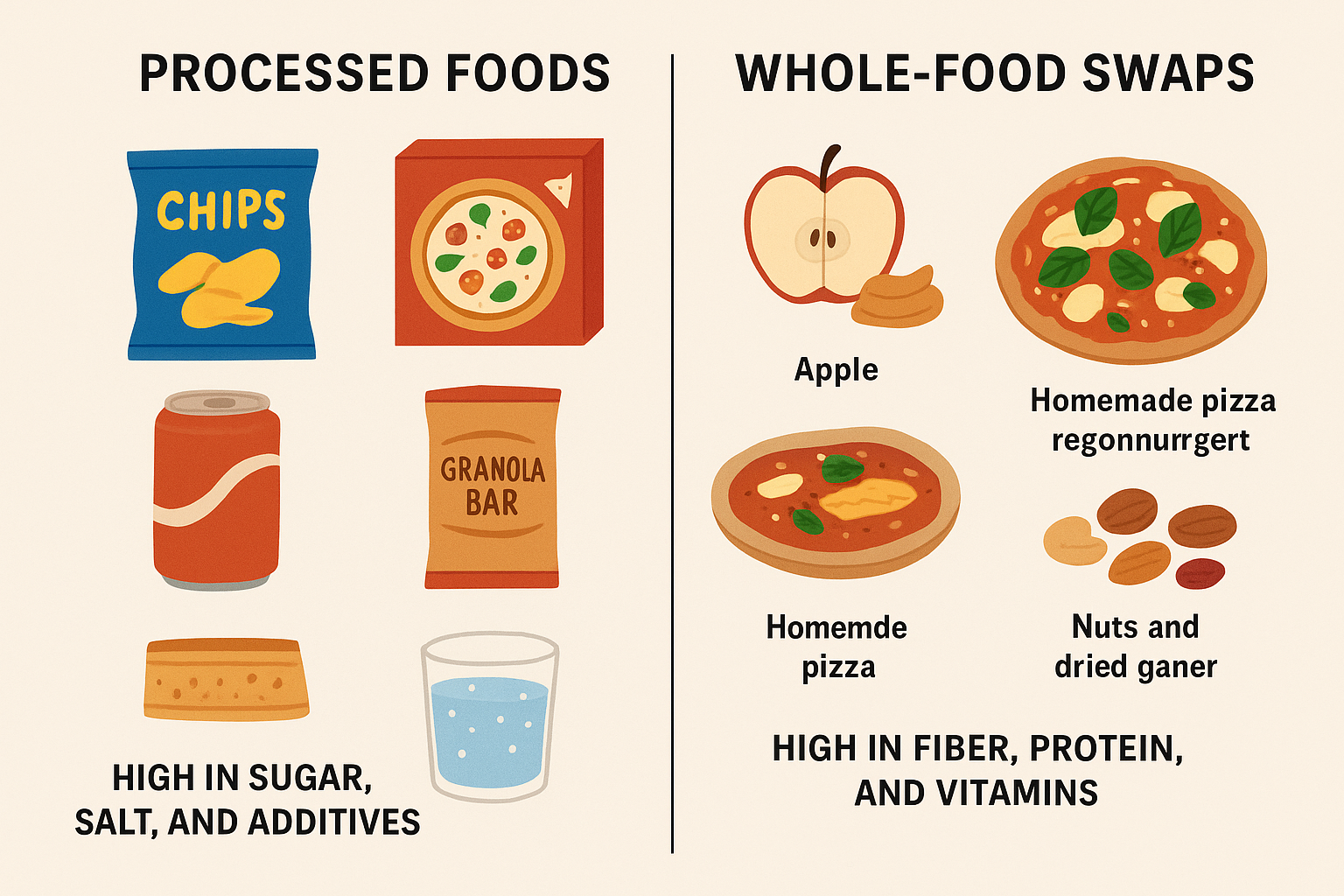
    The first step to reducing processed foods is recognizing what counts as processed. Not all processed foods are “bad”—for example, frozen vegetables or canned beans (low-sodium) are minimally processed and retain their nutrients. The problem is highly processed foods, which often have long ingredient lists with added sugars, unhealthy fats, preservatives, and artificial flavors. Examples include chips, soda, frozen pizzas, packaged snacks, and fast food.​

    The good news is that reducing processed foods doesn’t have to be hard—small, simple swaps can make a big difference. Here are some easy swaps to try:​

    • Instead of chips: Try apple slices with 1 tbsp of peanut butter, or carrot sticks with hummus. These swaps add fiber and protein, which keep you full, instead of the empty calories and salt in chips.​
    • Instead of soda: Opt for sparkling water with a slice of lemon or lime, or herbal iced tea (unsweetened). These drinks quench your thirst without the added sugar and calories in soda.​
    • Instead of frozen pizza: Make your own pizza with a whole wheat crust, fresh veggies (tomatoes, bell peppers, spinach), low-moisture mozzarella, and a drizzle of olive oil. It’s quicker than you think—pre-made whole wheat crusts are available at most grocery stores, and you can top it with whatever veggies you have on hand.​
    • Instead of packaged granola bars: Grab a handful of nuts (1oz) with a few unsweetened dried cranberries, or a hard-boiled egg. Most granola bars are high in added sugar, while these swaps add protein and healthy fats.​
    • Instead of white bread: Choose whole wheat bread. Whole wheat bread is high in fiber, which keeps you full and supports digestion, while white bread is refined and lacks nutrients.​

    To make these swaps stick, try these tips:​

    • Cook at home more: When you cook at home, you control the ingredients—no hidden sugars or salt. Start with simple meals that take 30 minutes or less, like stir-fries or salads.​
    • Read labels: Before buying a packaged food, check the ingredient list. If the first few ingredients are refined carbs (like white flour), added sugars (like high-fructose corn syrup), or unhealthy fats (like partially hydrogenated oil), put it back.​
    • Plan snacks ahead: Prep healthy snacks (like cut veggies or hard-boiled eggs) on Sundays so you have them ready when you’re hungry. This reduces the temptation to grab a processed snack.​

    Reducing processed foods isn’t about being perfect—it’s about making better choices most of the time. By incorporating these simple swaps into your routine, you’ll eat more nutrient-dense foods and support your long-term health.

  • The Role of Protein in Weight Management: How to Stay Full and Preserve Muscle

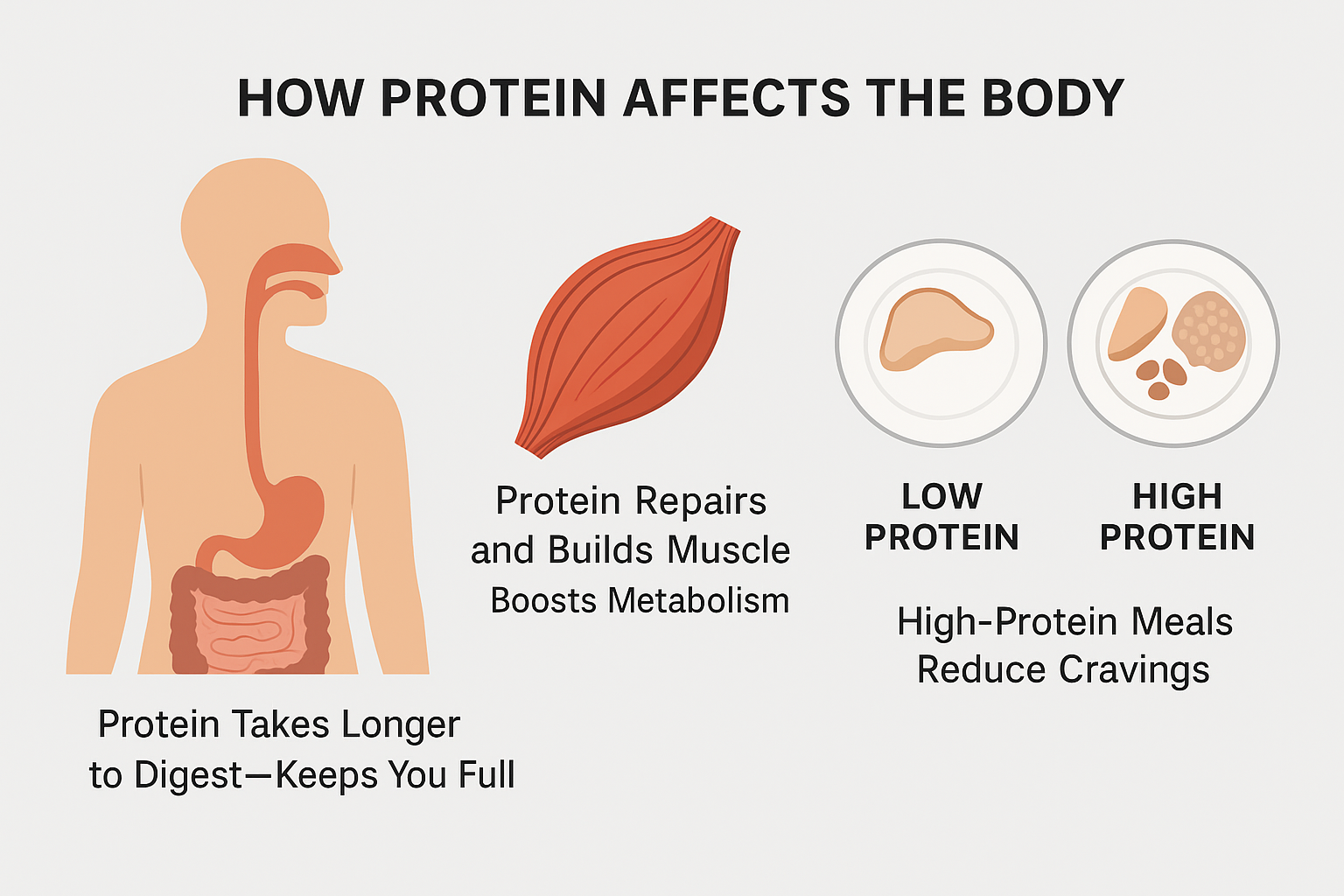
    Protein is often called the “most satisfying” macronutrient—and for good reason. It plays a crucial role in weight management by keeping you full, reducing cravings, and preserving muscle mass. Whether you’re looking to lose weight, maintain a healthy weight, or build muscle, incorporating enough protein into your diet is essential.​

    First, let’s understand why protein is so effective for weight management. When you eat protein, your body uses more energy to digest it compared to carbs or fat—a phenomenon called the “thermic effect of food.” This means protein slightly boosts your metabolism, even at rest. Additionally, protein takes longer to digest than other macronutrients, so it keeps you feeling full for hours after eating. Studies show that people who eat more protein tend to eat fewer calories overall, as they’re less likely to snack on unhealthy foods between meals.​

    Protein also helps preserve muscle mass—especially when you’re losing weight. When you lose weight, your body can break down muscle for energy if it doesn’t get enough protein. Muscle is important because it burns more calories at rest than fat, so preserving muscle helps keep your metabolism high. This is why people who include protein in their weight loss plans are more likely to keep the weight off long-term.​

    So, how much protein do you need? The general recommendation is 0.8g of protein per kilogram of body weight for sedentary adults. But if you’re active, trying to lose weight, or over 50, you may need more—1.2g to 1.6g per kilogram of body weight. For example, a 70kg person who exercises regularly would need 84g to 112g of protein per day.​

    Here are easy ways to add more protein to your diet:​

    • Breakfast: Add a scoop of protein powder to your oatmeal or smoothie, or eat 2 eggs with whole wheat toast. Greek yogurt (which has more protein than regular yogurt) with berries is also a great option.​
    • Lunch: Include a source of protein in your salad or sandwich—grilled chicken, tuna, tofu, or chickpeas. For example, a salad with mixed greens, quinoa, chickpeas, and avocado is high in protein and fiber.​
    • Dinner: Make protein the star of your meal—try a 4oz serving of salmon, 5oz of chicken breast, or ½ cup of lentils. Pair it with veggies and a small portion of whole grains for a balanced meal.​
    • Snacks: Choose high-protein snacks like a hard-boiled egg, a handful of almonds (7g of protein per 1oz), or a cup of cottage cheese.​

    It’s important to choose high-quality protein sources. Lean meats (chicken, turkey), fish (salmon, tuna), eggs, and dairy (Greek yogurt, cottage cheese) are excellent animal-based options. For plant-based eaters, lentils, chickpeas, tofu, tempeh, quinoa, and nuts are great choices.​

    By prioritizing protein in your diet, you’ll stay full, reduce cravings, and support your weight management goals—all while preserving muscle and keeping your metabolism strong.

  • Mindful Grocery Shopping: How to Stock Your Pantry for Healthy Eating

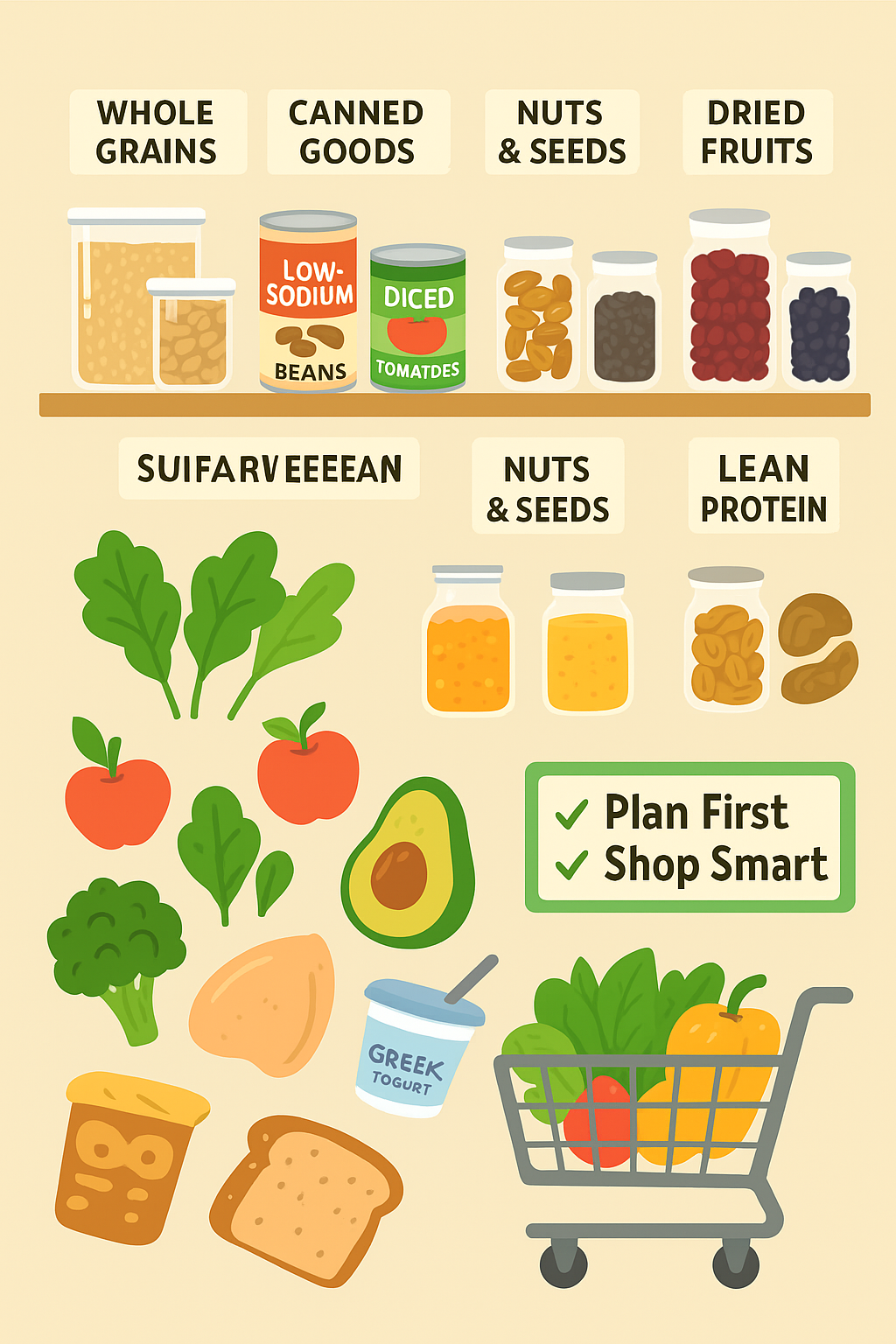
    The foundation of healthy eating starts with what’s in your pantry and fridge. If you stock your kitchen with nutritious, easy-to-prepare ingredients, you’ll be more likely to cook healthy meals at home—instead of reaching for takeout or processed snacks. Mindful grocery shopping means planning ahead, reading labels, and choosing foods that support your health goals.​

    The first step to mindful grocery shopping is making a plan. Before heading to the store, take inventory of what you already have at home to avoid buying duplicates. Then, create a meal plan for the week—think about breakfast, lunch, dinner, and snacks—and write a shopping list based on that plan. This will help you stay focused and avoid impulse buys (like chips or candy) that often end up in your cart when you’re hungry or unplanned.​

    When you’re at the store, focus on filling your cart with these nutrient-dense categories:​

    • Fresh Produce: Aim to fill half your cart with fruits and vegetables. Choose a variety of colors—dark green (spinach, broccoli), red (tomatoes, apples), orange (carrots, sweet potatoes)—to get a range of vitamins and minerals. Opt for in-season produce when possible, as it’s often fresher and more affordable.​
    • Whole Grains: Look for whole wheat bread, brown rice, quinoa, oats, and whole wheat pasta. These are high in fiber, which keeps you full and supports digestion. Check the ingredient list—”whole grain” or “whole wheat” should be the first ingredient.​
    • Lean Protein: Stock up on chicken breast, turkey, fish (salmon, tuna), eggs, Greek yogurt, and plant-based options like tofu, lentils, and beans. These foods help build and repair muscle, and keep you full longer than processed carbs.​
    • Healthy Fats: Choose avocados, nuts (almonds, walnuts), seeds (chia, flax), and olive oil. These fats are good for your heart and help your body absorb vitamins.​
    • Canned and Frozen Goods: Keep low-sodium canned beans, diced tomatoes, and tuna (in water) in your pantry—they’re quick to add to meals. Frozen fruits and vegetables are also a great option; they’re picked at peak ripeness and frozen immediately, so they retain their nutrients.​

    Reading labels is another key part of mindful grocery shopping. Pay attention to:​

    • Added Sugars: Many processed foods (like cereal, salad dressing, and even “healthy” granola bars) have hidden added sugars. Check the “Added Sugars” section on the nutrition label and choose options with 5g or less per serving.​
    • Sodium: Too much sodium can raise blood pressure. Look for low-sodium or no-salt-added versions of canned goods and snacks.​
    • Ingredient Lists: The shorter the ingredient list, the more whole and unprocessed the food. Avoid foods with long lists of artificial ingredients, preservatives, or words you can’t pronounce.​

    By following these tips, you’ll stock your kitchen with ingredients that make it easy to cook healthy, delicious meals—no matter how busy your schedule is.

  • Hydration Beyond Water: Creative Ways to Meet Your Fluid Needs

    Many people struggle to drink enough water each day, often finding plain water boring or forgetting to sip regularly. But staying hydrated doesn’t have to rely solely on water—there are plenty of delicious, nutrient-packed foods and drinks that can help you meet your daily fluid needs. The human body is made up of about 60% water, and proper hydration supports everything from digestion to brain function, so finding enjoyable ways to stay hydrated is key.​

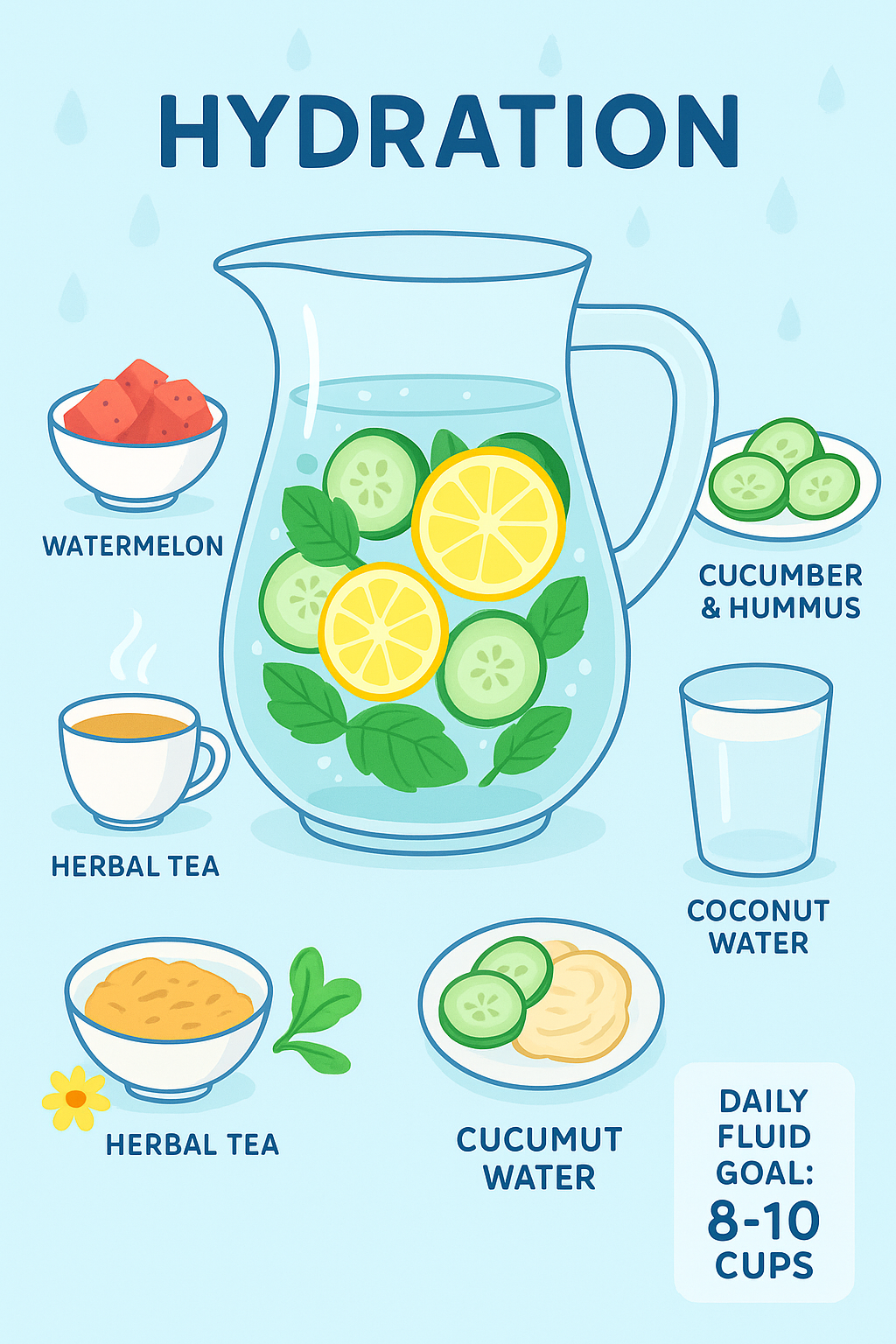
    First, let’s clarify how much fluid you actually need. The general guideline is 8–10 cups (2–2.5 liters) of fluid per day, but this can increase if you exercise heavily, live in a hot climate, or are pregnant or breastfeeding. Importantly, “fluid” includes more than just water—many foods are 80%–95% water and count toward your daily intake.​

    Here are some creative, hydrating alternatives to plain water:​

    • Infused Water: Add slices of fruit (lemon, lime, berries), vegetables (cucumber, carrot), or herbs (mint, basil) to a pitcher of water. The natural flavors make water more refreshing without adding sugar. Try cucumber-mint or strawberry-lime for a bright, summery twist.​
    • Herbal Teas: Caffeine-free herbal teas (like chamomile, peppermint, or hibiscus) are a great way to hydrate, especially in cooler weather. They’re warm, comforting, and can be enjoyed hot or iced. Steep a few tea bags in a large pitcher of water for iced tea, or sip a hot cup in the evening.​
    • Hydrating Fruits and Vegetables: Foods like watermelon (92% water), cucumber (96% water), oranges (87% water), lettuce (95% water), and celery (95% water) are not only high in water but also packed with vitamins and fiber. Snack on cucumber slices with hummus, add watermelon cubes to a salad, or blend spinach (91% water) into a smoothie.​
    • Coconut Water: For days when you sweat heavily (like after a workout), coconut water is a good option. It contains electrolytes like potassium, which help replace what’s lost through sweat. Choose unsweetened coconut water to avoid added sugar.​

    To make hydration a habit, try these practical tips:​

    • Keep a reusable water bottle with you at all times—having it visible will remind you to sip regularly.​
    • Set reminders on your phone or smartwatch to drink water every hour, especially if you work at a desk.​
    • Add hydrating foods to every meal: include a side of cucumber salad with lunch, or top your oatmeal with sliced peaches for breakfast.​
    • Flavor water with natural ingredients instead of reaching for sugary drinks like soda or sweetened iced tea.​

    Staying hydrated doesn’t have to be a chore. By incorporating these creative options into your routine, you’ll meet your fluid needs while enjoying delicious, nutrient-rich foods and drinks.

  • Food & Sleep: How What You Eat Affects Your Night’s Rest 😴

    We all know that caffeine and late-night snacks can ruin our sleep—but did you know that what you eat (and when you eat it) has a huge impact on how well you sleep? The right foods can help you fall asleep faster and stay asleep longer, while the wrong foods can leave you tossing and turning all night.

    First, let’s talk about foods that help you sleep:

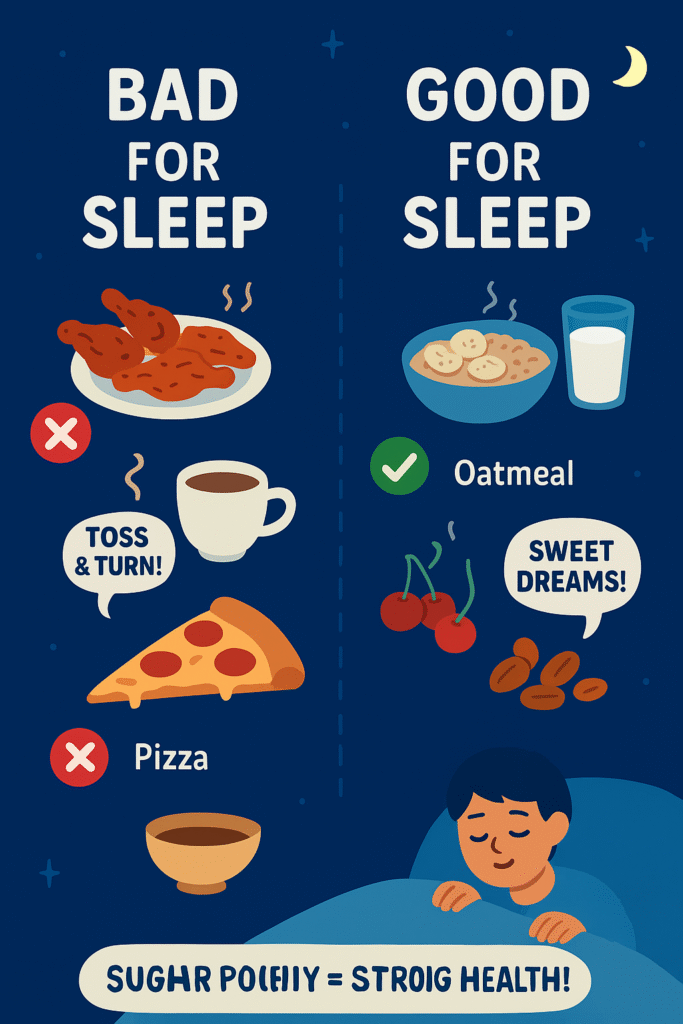
    • Foods with Tryptophan: Tryptophan is an amino acid that your body converts into serotonin (a mood booster) and then melatonin (the hormone that regulates sleep). Good sources include turkey, chicken, eggs, Greek yogurt, bananas, oats, and nuts (almonds, walnuts). Try a bowl of oatmeal with banana before bed—perfect for sleep!
    • Cherries (Especially Tart Cherries): Tart cherries are one of the few natural sources of melatonin. Studies show that drinking tart cherry juice can help you fall asleep faster and get more deep sleep. You can also eat fresh or dried cherries as a pre-bed snack.
    • Warm Milk: There’s a reason your grandma told you to drink warm milk before bed! Milk has tryptophan, and the warmth is calming—it helps your body relax. If you’re lactose intolerant, try warm almond milk.
    • Complex Carbs: Whole grains (oats, quinoa) and sweet potatoes help your body absorb tryptophan better. Avoid refined carbs (cookies, candy)—they cause blood sugar spikes and crashes, which disrupt sleep.

    Now, foods to avoid before bed (at least 2-3 hours before):

    • Caffeine: Coffee, tea, soda, and chocolate all have caffeine, which stays in your system for 6-8 hours. A cup of coffee at 2 PM can still affect your sleep at 10 PM!
    • Spicy, Greasy, or Heavy Foods: Foods like pizza, fried chicken, and spicy wings are hard to digest. They can cause heartburn and keep your body working overtime, making it hard to fall asleep.
    • Alcohol: Alcohol may make you drowsy at first, but it disrupts deep sleep (the most restorative kind). You’ll wake up more often during the night and feel tired in the morning.
    • Large Meals: Eating a big dinner right before bed can make you feel uncomfortable and bloated. Aim to finish eating 2-3 hours before you go to sleep.

    Other sleep-friendly eating habits:

    • Stay hydrated (but not too much): Drink water throughout the day, but avoid drinking a lot before bed—you don’t want to wake up to use the bathroom!
    • Eat regular meals: Skipping meals or eating at irregular times can disrupt your circadian rhythm (your body’s internal clock), which affects sleep.
    • Avoid late-night snacking: If you’re hungry before bed, choose a small, sleep-friendly snack (like a handful of cherries or a cup of warm milk)—not a big bowl of ice cream.

    💡 Pro Tip: Keep a sleep-food journal. Write down what you eat and how well you sleep each night. You’ll start to see patterns—like how spicy food makes you toss and turn, or how oatmeal helps you sleep like a baby!

Translate »