Author: xiao tiantian

  • Weekly Wellness Tips: 5 Minutes a Day to Maintain Great Energy Levels

    Monday · Wake-Up Day: Drink a “Debloating Drink” in the Morning

    When you wake up, don’t rush for cold boiled water. Brew a cup of warm lemon water (1 fresh lemon slice in 300ml warm water), add a pinch of sea salt, stir well, and drink. The organic acids in lemon awaken your digestive system, while sea salt helps your body flush out water retained overnight. After drinking, you’ll feel less bloated and more alert—it’s way better than coffee as a “Monday starter.”

    Tuesday · Shoulder Relaxation Day: 5-Minute Wall Stand to Fix Posture

    Sitting for hours at work often leads to rounded shoulders and a hunched back. Spend 5 minutes doing a “wall stand” during lunch: Press your head (back of the skull), shoulder blades, buttocks, calves, and heels firmly against the wall. Let your hands hang naturally and tuck your chin slightly. This exercise corrects poor posture, relaxes tight neck and shoulders. Afterward, your shoulders won’t ache, and even your breathing feels smoother.

    Wednesday · Midweek Pick-Me-Up Day: Dab Peppermint Oil on Temples to Fight Fatigue

    Wednesday is typically the most tiring day of the week. When you feel drowsy in the afternoon, skip chugging coffee. Grab a small bottle of peppermint oil (or Fengyoujing as a substitute), dab 1 drop onto each temple, and massage gently for 30 seconds. The coolness of peppermint gives you an instant energy boost without making your heart race—unlike coffee, it won’t mess with your nighttime sleep.

    Thursday · Stomach-Care Day: Have Millet & Chinese Yam Porridge for Dinner

    Busy work often makes you skip meals or eat irregularly. On Thursday night, cook a bowl of millet and Chinese yam porridge: Soak millet for 10 minutes first, add peeled and cubed Chinese yam, then simmer for 20 minutes until the porridge thickens. Millet nourishes the spleen, and Chinese yam protects the stomach. A warm bowl eases the digestive burden from daytime irregular eating, with no extra strain on your body.

    Friday · Stress-Relief Day: Soak Your Feet Before Bed to Boost Circulation

    After work on Friday, soak your feet in warm water (around 40°C) for 10 minutes. Toss 2-3 fresh ginger slices (no need to peel) into the water. The warming properties of ginger seep through the acupoints on your feet, dispelling the cold accumulated over the day. Soak until you break a light sweat—your hands and feet won’t feel cold before bed, you’ll fall asleep faster, and it eases the week’s work stress.

    Saturday · Relaxation Day: Do Cat-Cow Stretches to Loosen Your Whole Body

    No need to rush on Saturday. When you wake up, do a set of Cat-Cow Stretches in bed: Kneel on all fours (hands under shoulders, knees under hips). Inhale (Cow Pose): Lift your head, arch your back, and let your belly sink. Exhale (Cat Pose): Tuck your chin, round your back, and pull your belly in. Repeat 5-8 times. This stretch loosens your spine and lower back muscles, unwinding your body from a week of sitting—you’ll feel relaxed all over afterward.

    Sunday · Energy-Storage Day: Brew Wolfberry & Chrysanthemum Tea to Support Liver Health

    On Sunday afternoon, brew a cup of wolfberry and chrysanthemum tea: Use 5 wolfberries and 3 dried chrysanthemums, brewed with warm water (boiling water will destroy the chrysanthemums’ nutrients). Wolfberries nourish the liver, and chrysanthemums soothe the eyes. Drinking it throughout the afternoon relieves eye strain from scrolling phones or watching TV, eases the liver’s workload, and helps you replenish energy for the week ahead.

    These tips don’t take much extra time—just 5-10 minutes a day. The key is consistency. If you want an easier way to remember them, I can organize this corrected English version into a printable “Weekly Wellness Checklist” with clear daily items, so you can stick it on your fridge or save it in your phone. Need me to put that together?


  • Weekly Immune-Boosting Vitamin C Fruit List

    1. Monday: 1 orange + 1 small carton of strawberries – Kickstart your week with energy. Strawberries are sweet and sour, appetizing, and when paired with oranges (a classic source of Vitamin C), they make a great combo.
    2. Tuesday: 2 kiwifruits – Known as the “king of Vitamin C”. Eat them directly or mash them into pulp to quickly meet your daily Vitamin C needs.
    3. Wednesday: 2-3 grapefruit segments – High in water and low in calories. Enjoy them as an afternoon snack to relieve fatigue while replenishing Vitamin C.
    4. Thursday: 1 small handful of fresh jujubes (about 10 pieces) – Their Vitamin C content is 60 times that of apples. Eat them as a snack, but note not to eat too many at once to avoid bloating.
    5. Friday: 2 mandarins + half a carton of blueberries – Mandarins are easy to carry; pair them with blueberries to get anthocyanins for double immune support.
    6. Saturday: 1 guava – A dark horse for Vitamin C among tropical fruits. Eat it directly or sprinkle a little salt on it for a unique, nutritious taste.
    7. Sunday: Mixed fruit platter (orange + kiwifruit + strawberry) – You have more time on weekends. Mix and eat the core Vitamin C fruits of the week for more comprehensive nutrition.

  • Daily Health Tips Checklist

    • Hydration Habit: Drink 1.5-2 liters of warm water daily; don’t wait until you’re thirsty. Have a cup of warm water on an empty stomach in the morning to awaken the digestive system and protect the spleen and stomach.
    • Sedentary Protection: Get up and move for 5 minutes every time you sit for 1 hour (stretch your lower back, take a short walk) to reduce slow blood circulation and lumbar spine pressure.
    • Sleep Optimization: Stay away from electronic screens 1 hour before bed (blue light inhibits melatonin). Read a book or listen to light music to help fall into deep sleep.
    • Meal Order: Follow the order of “vegetables first → then meat/eggs → finally staple foods” during meals to slow down blood sugar rise, promote digestion, and avoid overeating.
    • Oral Care: Brush your teeth for 2 minutes each morning and night (remember to brush the inner sides of teeth and tongue coating). Rinse your mouth promptly after meals to reduce bacteria growth and prevent tooth decay and periodontitis.
    • Bowel Habit: Keep each toilet session within 5 minutes. Avoid using phones/reading books while on the toilet to reduce perianal venous pressure and lower the risk of hemorrhoids.
    • Leg Health: Try to avoid crossing your legs for a long time. Keep your feet flat on the ground when sitting to prevent pelvic tilt, impaired lower limb blood circulation, and muscle imbalance.
  • Consequences of Crossing Legs for a Long Time

    Crossing legs for an extended period primarily leads to impeded lower limb blood circulation and lumbar spine/pelvic deformation. Additionally, it triggers a chain of issues such as leg muscle imbalance and joint damage.

    The specific consequences can be categorized into 4 key types, with their core impacts clearly outlined below:

    • Skeletal and Joint Damage: Long-term unilateral stress causes pelvic tilt and lumbar scoliosis. It also increases pressure on the inner side of the knee joint, inducing knee osteoarthritis or ligament strain.
    • Blood Circulation Disorders: Crossing the legs compresses blood vessels, slowing down the return of blood in the lower limbs. This easily leads to leg numbness and swelling; in the long run, it may raise the risk of varicose veins.
    • Nerve Compression Discomfort: While blood vessels are compressed, the sciatic nerve is also squeezed. This can cause radiating tingling and numbness in the legs, especially after prolonged sitting.
    • Muscle Imbalance and Deformation: The leg muscles (e.g., hip flexors, calf muscles) on the side where the leg is often crossed become tight, while the other side becomes relaxed. Over time, this results in asymmetric leg muscles and even a slight “one leg longer than the other” visual effect.

  • What to Eat in Winter?

    Winter is ideal for the following foods:

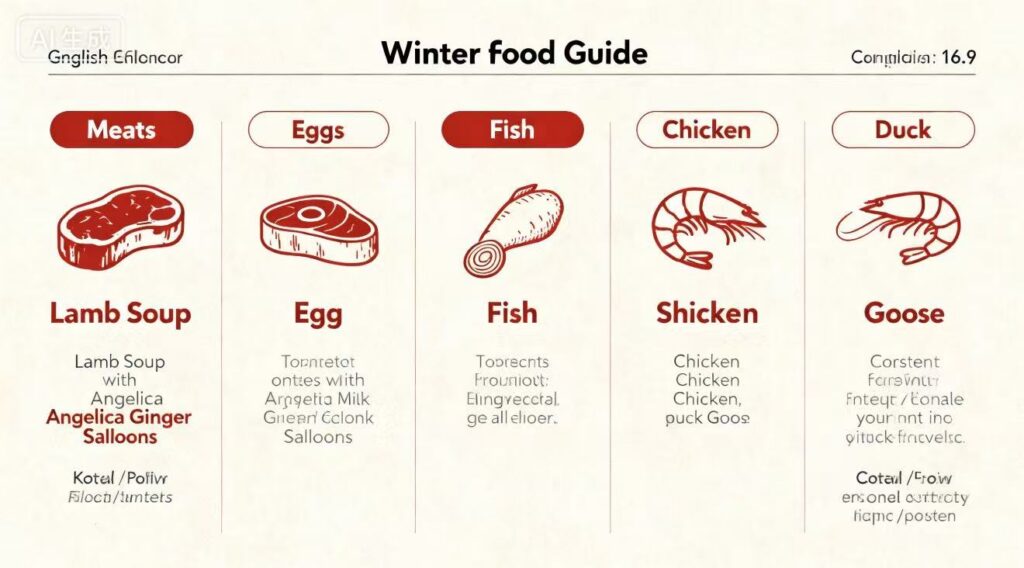
    • Meats: Lamb is warm in nature, rich in high-quality protein, vitamins, and minerals. It boosts blood circulation and strengthens the body—Lamb Soup with Angelica, Ginger, and Scallions is a classic winter nourishing recipe. Additionally, eggs, milk, fish, shrimp, chicken, duck, and goose are great choices. They provide abundant protein to enhance the body’s cold resistance.
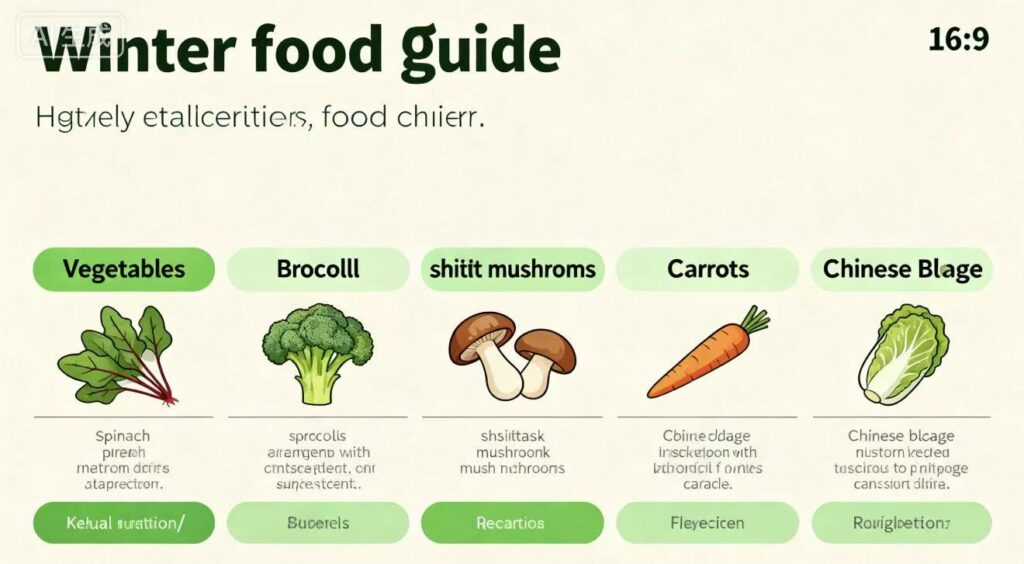
    • Vegetables: Spinach is high in vitamin K and beta-carotene, beneficial for bone health and cardiovascular protection. However, it contains high oxalic acid and needs to be blanched in advance. Broccoli is rich in isothiocyanates and folic acid, which help prevent cancer and cardiovascular diseases. Shiitake mushrooms are packed with lentinan and vitamin D, regulating immunity and promoting calcium absorption. Carrots are high in beta-carotene, supporting respiratory health. Cole (Chinese cabbage) is high in calcium and low in calories, suitable for winter consumption.
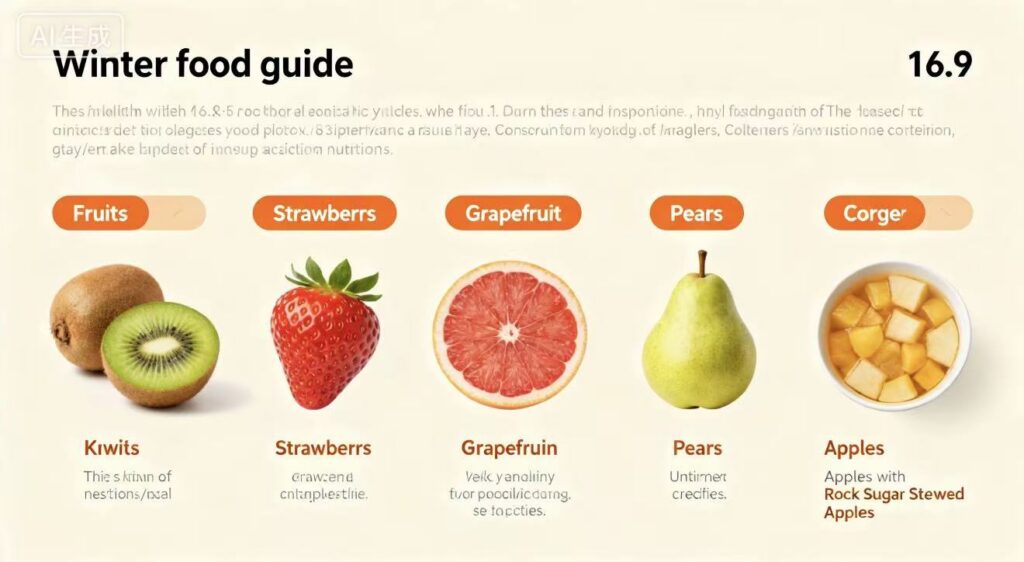
    • Fruits: Kiwi fruit is abundant in vitamin C and also contains lutein, which promotes collagen synthesis and boosts immunity. Strawberries are in-season winter fruits, low in calories, and high in vitamin C and folic acid, with antioxidant effects. Grapefruit is low in sugar and has a slow glycemic index, ideal for winter. Pears are rich in dietary fiber, aiding bowel movements—great for people prone to constipation. Apples are high in antioxidants like polyphenols, have a moderate glycemic index, and can be eaten roasted or cooked into Rock Sugar Stewed Apples.
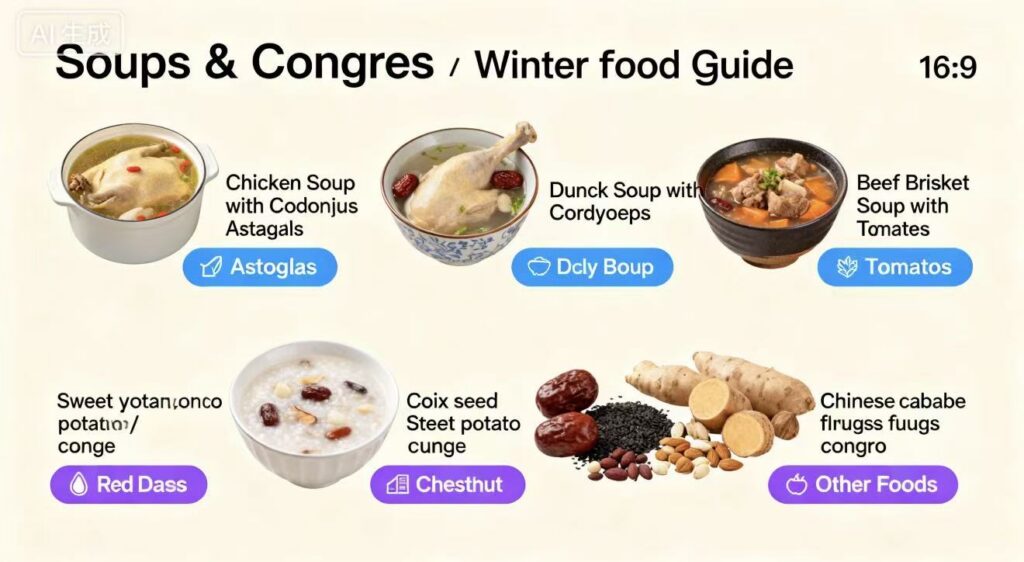
    • Soups & Congees: Nourishing soups are perfect for winter, such as Chicken Soup with Codonopsis and Astragalus, Duck Soup with Cordyceps, and Beef Brisket Soup with Tomatoes. These soups use chicken, duck, fish, or meat as the main ingredient, supplemented with warm ingredients like Chinese yam and wolfberries, offering rich nutrition. Congees like sweet potato congee are easy to digest and aid bowel movements; coix seed and sweet potato congee strengthens the spleen and stomach while lowering blood lipids; Chinese cabbage and fungus congee moistens the lungs, promotes fluid production, and nourishes the stomach.
    • Other Foods: Red dates contain active ingredients like cyclic adenosine monophosphate (cAMP), enhancing immunity. Cooked with longans and wolfberries into congee, they nourish qi and blood. Black sesame is rich in vitamin E and unsaturated fatty acids, nourishing the liver and kidneys—it can be ground and mixed with walnut powder for consumption. Chestnuts warm and tonify the spleen and kidneys, providing excellent nourishment when eaten in moderation.
Translate »